
What Makes Authentic Shilajit Different? A Guide to Purity and Quality
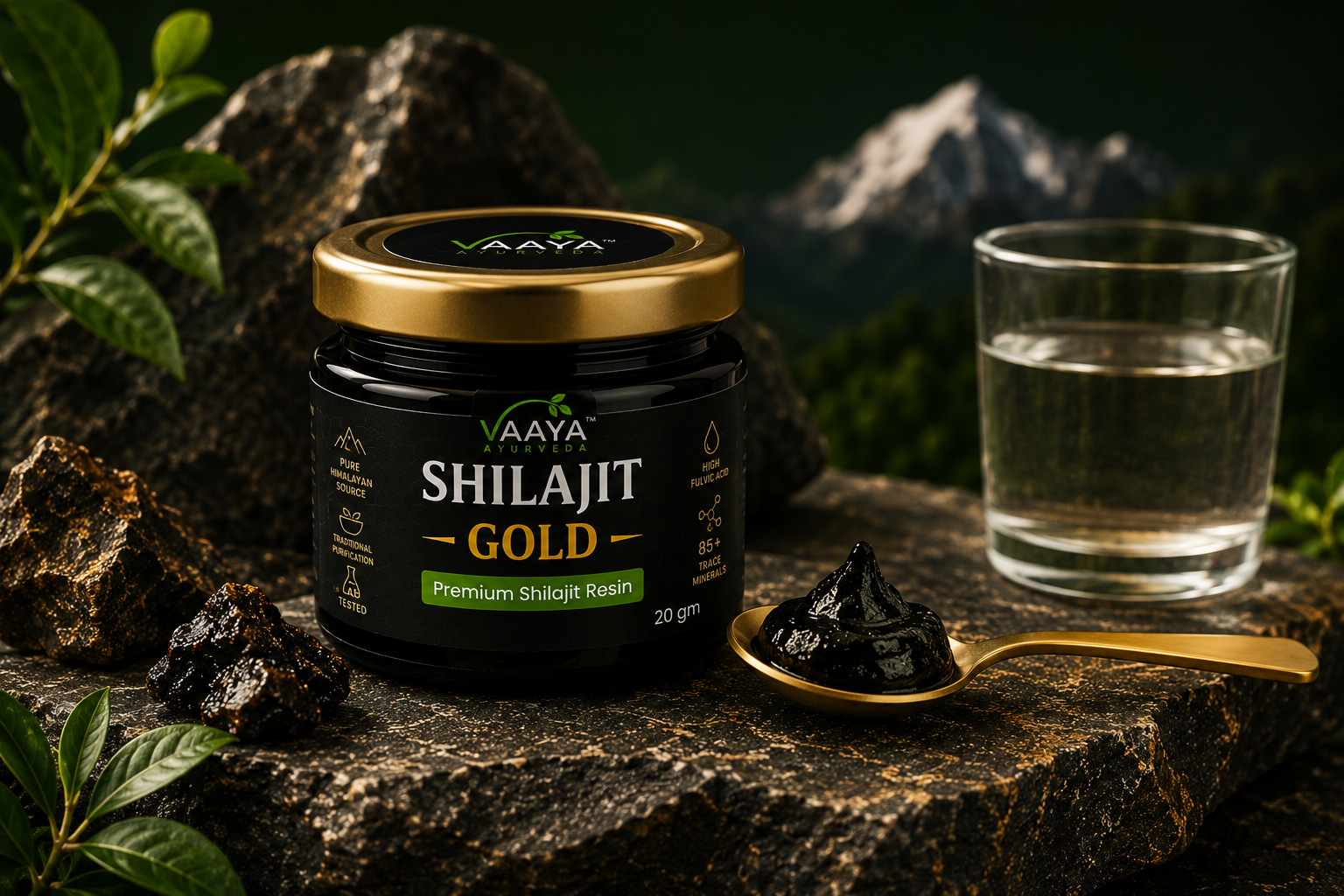
Authentic Shilajit is more than a dark, sticky substance sold in a jar. Quality depends on its source, purification process, composition, testing, storage, and the transparency of the manufacturer. A trustworthy Shilajit product should have clearly stated ingredients, appropriate purification, quality testing, traceable manufacturing information, and usage instructions.
Key Takeaways
- Shilajit quality can vary considerably between products.
- Source alone does not establish authenticity or purity.
- Proper purification is an important part of traditional Shilajit preparation.
- Laboratory testing is essential for assessing contaminants and product quality.
- Resin and capsules can both be legitimate formats when properly manufactured.
- Extremely low prices and vague sourcing information deserve caution.
- A transparent label is one of the simplest indicators of a responsible brand.
- More Shilajit is not necessarily better.
Shilajit Is Not Simply "Black Resin"
Shilajit is a naturally occurring substance found in mountainous regions and has a long history of use in Ayurvedic traditions.
Its appearance can vary depending on its geographical origin, mineral composition, processing, and environmental conditions.
This is one reason consumers should not judge a product solely by its colour or texture.
A genuinely dark resin is not automatically authentic, and a lighter product is not automatically inferior.
Quality requires a much broader assessment.
Why Purification Matters
Raw Shilajit collected from natural environments is not necessarily suitable for direct consumption.
Traditional Ayurvedic processing involves purification before the substance is incorporated into a finished formulation.
Modern manufacturing adds another important layer: quality control.
A responsible manufacturer should have processes designed to ensure that the finished product meets appropriate standards for identity, purity, safety, and consistency.
What About Fulvic Acid?
Fulvic acid is one of the compounds commonly associated with Shilajit and is frequently highlighted on commercial labels.
However, a high stated fulvic acid percentage by itself does not prove that a product is authentic or superior.
A quality assessment should consider the complete product:
- Source
- Purification
- Composition
- Testing
- Manufacturing standards
- Batch consistency
- Label transparency
One number should never become the entire definition of quality.
How Laboratory Testing Helps
Laboratory testing provides an important layer of quality assurance.
Depending on the product and applicable standards, testing may examine aspects such as:
- Heavy metals
- Microbial contamination
- Identity and composition
- Physical and chemical characteristics
- Batch consistency
Consumers should look for brands that can clearly explain their testing and manufacturing practices rather than relying entirely on marketing claims.
Resin vs Capsules
Authentic Shilajit can be presented in different forms.
Shilajit Resin
Resin is the traditional format most commonly associated with Shilajit.
It is typically measured in small quantities and dissolved in warm water or milk according to the manufacturer's instructions.
Because serving sizes can be small, using the supplied measuring spoon or following the stated dosage is important.
Shilajit Capsules
Capsules offer convenience and a consistent pre-measured serving.
They may also contain additional Ayurvedic ingredients, depending on the formulation.
This means consumers should always read the complete ingredient list rather than assuming every Shilajit capsule contains only Shilajit.
How to Evaluate a Shilajit Product
Before purchasing, look beyond the front of the package.
Check the label for:
1. Ingredient information
The product should clearly state what it contains.
2. Manufacturer information
The manufacturer or marketer should be identifiable and contactable.
3. Batch information
A batch number and relevant manufacturing details provide greater traceability.
4. Quality testing
Look for credible information about laboratory testing and quality control.
5. Directions for use
The recommended serving should be clearly stated.
6. Regulatory information
Products sold in India should carry the appropriate information required under applicable regulations.
Beware of Extraordinary Claims
Another useful test of authenticity is the language used to market the product.
Be cautious of products promising:
- Instant transformation
- Guaranteed increases in testosterone
- Guaranteed weight loss
- Cures for chronic diseases
- Immediate treatment of medical conditions
- Unlimited energy
Traditional Ayurvedic products have a long history, but that does not mean every modern marketing claim is scientifically established.
Good wellness brands should communicate responsibly.
Does Shilajit Have to Come From the Himalayas?
Shilajit is associated with several mountainous regions, including the Himalayas.
However, simply writing "Himalayan" on a label does not independently establish authenticity.
A more meaningful approach is to look for transparent information about sourcing, processing, manufacturing, and testing.
The quality of the finished product depends on the entire supply chain—not just the geographical name printed on the package.
What Does Quality Shilajit Look Like?
There is no single visual characteristic that can prove authenticity.
Depending on the product, genuine Shilajit resin may be dark brown to nearly black and may become softer when warmed.
But appearance alone cannot establish purity.
Laboratory testing and responsible manufacturing practices provide much stronger evidence than colour, smell, texture, or claims made on social media.
Frequently Asked Questions
How can I tell if Shilajit is authentic?
You cannot reliably establish authenticity from appearance alone. Look for transparent sourcing, appropriate purification, complete ingredient information, manufacturing details, and credible laboratory testing.
Is darker Shilajit better?
Not necessarily. Colour can vary naturally and can also be affected by processing. Darkness alone is not a reliable measure of quality.
Should authentic Shilajit dissolve in water?
Shilajit resin is generally intended to dissolve or disperse in warm water or milk according to product instructions. However, this behaviour alone should not be treated as a definitive authenticity test.
Is Shilajit resin better than capsules?
Neither format is automatically better. Resin offers the traditional format, while capsules provide convenience and a consistent serving. The quality of the formulation and manufacturing process matters more than the format itself.
What should I look for on a Shilajit label?
Look for clear ingredient information, serving instructions, manufacturer or marketer details, batch information, regulatory details, and evidence of appropriate quality testing.
Is a high fulvic acid percentage proof of quality?
No. Fulvic acid is an important characteristic frequently discussed in Shilajit, but one numerical claim cannot establish overall authenticity, purity, or quality.
Final Thoughts
Choosing Shilajit should not be a search for the darkest resin, the highest number on a label, or the most dramatic marketing claim.
A better approach is to ask simple questions:
Where did it come from?
How was it processed?
What does it contain?
Was it tested?
Who manufactured it?
Can the brand explain its claims?
Quality is built through transparency, responsible manufacturing, and consistency—not through marketing alone.
Quality & Transparency
This article is intended for educational purposes only and should not be considered medical advice. Shilajit and Ayurvedic products are not intended to diagnose, treat, cure, or prevent any disease. Consult a qualified healthcare professional before using Shilajit if you are pregnant, breastfeeding, taking medication, or managing a medical condition.
About Vaaya
At Vaaya Ayurveda, we believe that authentic wellness begins with authentic ingredients and responsible practices. Our approach combines the heritage of Ayurveda with careful product formulation, quality standards, and transparent information—so that consumers can make informed choices about their wellness.
Sources
- Ministry of AYUSH — https://www.ayush.gov.in/
- FSSAI — https://www.fssai.gov.in/
- National Center for Biotechnology Information (NCBI) — https://www.ncbi.nlm.nih.gov/
- PubMed — https://pubmed.ncbi.nlm.nih.gov/
Begin your Shilajit ritual
Vaaya Shilajit is sourced from high-altitude Himalayan rock, purified the traditional Ayurvedic way, and lab-tested for heavy metals. Whether you start with the pure resin, the gold resin, or the travel-friendly capsules, consistency is what changes how you feel.
Questions? Write to us at care@vaayaayurveda.com
Related reading
 Everyday Wellness28 Sept 202610 min read
Your Body Has a Clock: How Daily Routines Affect Your Health
Your body follows a natural 24-hour rhythm that influences when you feel awake, sleepy, hungry and ready to rest. Discover how everyday habits such as morning light, meal timing, movement and consistent sleep can help support your body's internal clock.
Read article Digestive Wellness7 Sept 202611 min read
Dietary Fibre: Why Your Gut Needs More Than Just Roughage
Dietary fibre is more than something that keeps digestion moving. From whole grains and pulses to fruits, vegetables, nuts and seeds, fibre-rich foods can support digestive health and form an important part of a balanced diet.
Read article Healthy Ageing5 Sept 202610 min read
Healthy Ageing: 8 Everyday Habits That Help You Age Well
Ageing is inevitable, but how we age is influenced by many factors. Discover eight practical habits that can support physical health, mental wellbeing, mobility and independence as you grow older.
Read article