
Dietary Fibre: Why Your Gut Needs More Than Just Roughage
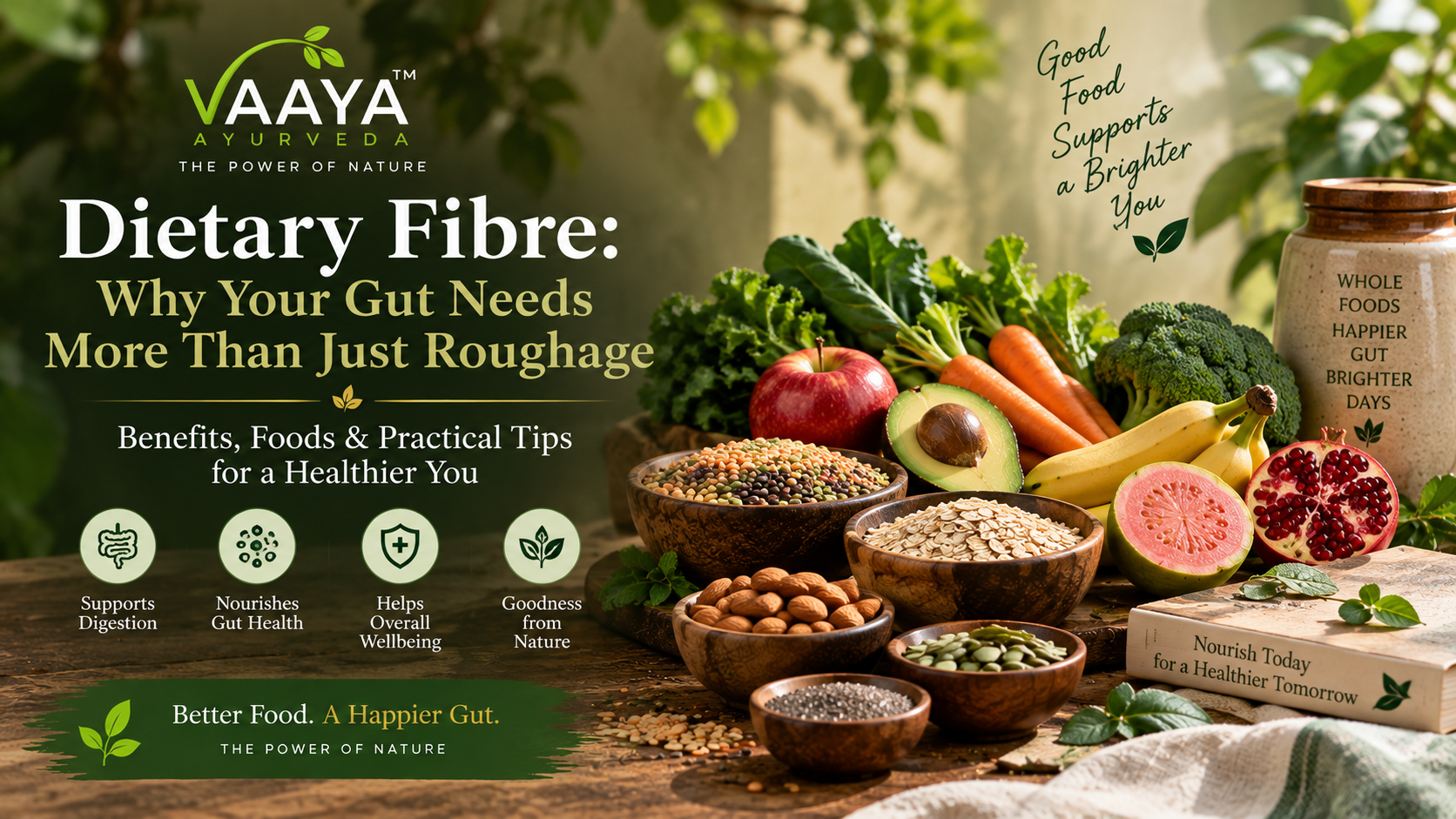
Dietary Fibre: Why Your Gut Needs More Than Just Roughage
Dietary fibre is the part of plant foods that your body does not completely digest.
It is found naturally in foods such as vegetables, fruits, whole grains, pulses, nuts and seeds.
Fibre is best known for supporting regular bowel movements, but its role is much broader. A fibre-rich eating pattern can contribute to digestive health and is an important part of an overall healthy diet.
The World Health Organization recommends that people over the age of 10 consume at least 25 grams of naturally occurring dietary fibre each day.
But there is an important distinction:
Fibre is not a magic ingredient that makes an unhealthy diet healthy.
The best approach is to obtain fibre from a variety of minimally processed plant foods as part of a diverse, balanced diet.
Key Takeaways
• Fibre comes naturally from plant foods such as fruits, vegetables, pulses, whole grains, nuts and seeds.
• Fibre can help add bulk to stools and support regular bowel movements.
• Adults generally need substantially more fibre than many people currently consume.
• Increasing fibre gradually can help reduce bloating and digestive discomfort.
• Adequate fluid intake is important when increasing fibre.
• Whole foods are usually preferable to relying heavily on fibre supplements.
• Different people tolerate different fibre-rich foods differently.
• A healthy gut is supported by an overall healthy dietary pattern—not one "superfood."
What Exactly Is Dietary Fibre?
Unlike carbohydrates such as starch and many sugars, dietary fibre is not fully broken down and absorbed in the small intestine.
It travels through the digestive system and can influence the way food and waste move through the gut.
There are different types of fibre, and they do not all behave in exactly the same way.
Some fibres absorb water and form a softer, bulkier material.
Others add bulk to stool and help move material through the digestive tract.
Certain fibres can also be fermented by microorganisms in the large intestine.
This is one reason why "fibre" should not be thought of as a single substance with a single effect.
Different foods contain different combinations of fibres and other nutrients.
Why Does Fibre Matter for Digestion?
One of the simplest roles of fibre is helping maintain healthy bowel function.
When your diet contains adequate fibre, it can help increase stool bulk and, together with sufficient fluid, make stools easier to pass.
This is particularly relevant when constipation is an issue.
But fibre does not work in isolation.
If someone suddenly moves from a very low-fibre diet to a very high-fibre diet, they may experience bloating, gas or abdominal discomfort.
That is why gradual change is usually a better strategy.
Fibre and Your Gut Microbiome
Your digestive tract is home to a huge community of microorganisms.
Some types of dietary fibre can be fermented by bacteria in the large intestine.
This interaction between food and gut microorganisms is one reason fibre has become such an important subject in nutrition research.
However, "feeding your gut bacteria" should not become another wellness slogan without context.
Your gut microbiome is complex.
Different people have different microbial communities, and foods can affect individuals differently.
Rather than trying to manipulate your microbiome with one particular food, a more sensible approach is to regularly consume a diverse range of plant foods.
Variety matters.
Where Can You Get Fibre?
You don't need exotic ingredients or expensive supplements.
Many everyday foods are naturally rich in fibre.
Pulses and Legumes
Lentils, chickpeas, kidney beans, black beans, peas and other legumes are excellent sources.
They also provide protein and other nutrients, making them particularly useful in plant-forward diets.
Whole Grains
Choose whole or minimally processed grains more often.
Examples include:
• Oats
• Brown rice
• Whole-wheat products
• Barley
• Millets
• Whole-grain breads
• Other traditional whole grains
Whole grains generally contain more fibre than refined versions because less of the grain has been removed during processing.
Fruits
Fruits provide fibre along with vitamins, minerals and naturally occurring sugars.
Examples include:
• Apples
• Pears
• Oranges
• Guava
• Berries
• Bananas
• Pomegranate
Eating whole fruit generally provides more fibre than drinking fruit juice.
Vegetables
Vegetables can make a major contribution to daily fibre intake.
Think beyond salads.
Vegetables can be included in:
• Curries
• Stir-fries
• Soups
• Stews
• Sandwiches
• Grain bowls
• Traditional Indian meals
Variety is more important than obsessing over one particular vegetable.
Nuts and Seeds
Almonds, peanuts, walnuts, chia seeds, flaxseeds and other nuts and seeds can contribute fibre while also providing healthy fats and other nutrients.
Because they are energy-dense, portion size still matters.
How Much Fibre Do You Need?
The exact requirement varies by age and individual circumstances.
For people over 10 years of age, WHO recommends at least 25 grams of naturally occurring dietary fibre per day.
Some national dietary guidelines recommend higher amounts for adults depending on age and sex.
The practical lesson is not that you need to calculate every gram.
Instead, look at your plate.
Are you regularly eating vegetables?
Are you eating whole fruits?
Do pulses appear in your meals?
Are some of your grains whole rather than refined?
Do you include nuts or seeds?
If the answer to most of these is yes, you're probably moving in the right direction.
How to Increase Fibre Without Upsetting Your Stomach
More fibre is not necessarily better if you introduce it too quickly.
If your current diet is low in fibre, increase it gradually.
Start With One Change
You could add:
• Oats at breakfast
• A serving of fruit during the day
• Lentils or beans with a meal
• More vegetables at lunch or dinner
• A small serving of nuts or seeds
Once that becomes comfortable, add another.
Drink Enough Fluids
Fibre and fluids work together.
When increasing your fibre intake, make sure you are drinking adequate fluids according to your individual needs.
This is especially relevant when trying to improve constipation.
Give Your Body Time
Gas and bloating can occur when fibre intake rises suddenly.
A gradual increase gives your digestive system time to adapt.
If significant or persistent digestive symptoms continue, don't simply assume that you need more fibre. Speak with a healthcare professional.
Does Fibre Help With Constipation?
It can.
Dietary fibre is one of the lifestyle measures commonly recommended for preventing and managing constipation.
But constipation has many possible causes.
It can be associated with inadequate fibre, insufficient fluid intake, low physical activity, certain medications, changes in routine and various medical conditions.
For some people, increasing fibre helps considerably.
For others, simply adding large amounts of fibre may make symptoms worse.
The right approach depends on the individual.
Persistent constipation should not be treated indefinitely as a simple dietary problem.
Is All Fibre the Same?
No.
This is one reason why simply looking at a number on a nutrition label does not tell the entire story.
Different fibres have different physical and biological properties.
Some are more readily fermented by gut microorganisms.
Some hold water.
Some contribute more to stool bulk.
Some foods contain several different types at the same time.
This is another reason to obtain fibre from a wide variety of foods rather than trying to get your entire daily requirement from one fibre product.
Whole Foods vs Fibre Supplements
Fibre supplements can have a role in specific situations.
For example, a healthcare professional may recommend a particular fibre supplement for constipation or another digestive issue.
But for general wellness, whole foods offer something supplements don't provide in the same package.
A bowl of lentils doesn't just contain fibre.
It also contains protein, minerals and other compounds.
An apple provides fibre along with vitamins, minerals and naturally occurring plant compounds.
Vegetables provide a wide range of nutrients.
Whole grains contain multiple components of the grain.
This is why dietary quality matters.
The goal is not simply to hit a fibre number.
It is to eat a nutritious diet.
What Ayurveda Says About Fibre and Digestion
Ayurveda does not describe digestion using the same scientific framework used in modern nutrition.
Traditional Ayurvedic concepts such as Agni are part of a different medical and philosophical system.
However, there is an interesting practical overlap.
Ayurvedic dietary traditions have long emphasised paying attention to digestion, food quality, routine and individual tolerance.
Modern nutrition similarly recognises that dietary requirements and digestive responses vary between individuals.
The important distinction is that traditional concepts should not automatically be presented as scientifically established mechanisms.
A sensible approach is to appreciate traditional dietary wisdom while evaluating health claims through modern evidence.
8 Easy Ways to Eat More Fibre
You don't need to completely redesign your diet.
Try simple substitutions and additions.
1. Choose Whole Fruit
Eat an orange instead of drinking orange juice.
2. Add Pulses
Include dal, chickpeas, beans or other legumes regularly.
3. Add Vegetables to More Meals
Don't reserve vegetables only for dinner.
4. Choose Whole Grains More Often
Replace some refined grains with whole-grain alternatives.
5. Add Nuts or Seeds
A modest portion can add fibre and healthy fats.
6. Try Oats
Oats are an easy breakfast option and contain soluble fibre.
7. Keep the Variety High
Rotate your fruits, vegetables, grains, pulses, nuts and seeds.
8. Increase Gradually
If your current diet is low in fibre, don't suddenly double your intake overnight.
What About "Gut Health" Foods?
The wellness industry has created a huge market around gut health.
You'll find products promising:
"Detoxed digestion."
"Perfect gut bacteria."
"Instant gut healing."
"Flat stomach."
"Complete gut reset."
Be skeptical of such claims.
There is no single food that can "reset" your gut.
Gut health is influenced by many factors, including diet, physical activity, medications, illness, sleep and other aspects of lifestyle.
A varied diet rich in minimally processed plant foods is a much more sensible foundation than chasing the latest gut-health trend.
Your Gut Does Not Need a Detox
Your digestive system does not need a special juice cleanse or expensive detox programme simply because you ate a heavy meal.
Your body already has systems responsible for processing nutrients and eliminating waste.
Instead of periodically trying to "cleanse" your digestive system, focus on everyday habits:
Eat a varied diet.
Get enough fibre.
Stay adequately hydrated.
Move regularly.
Sleep well.
Avoid excessive alcohol.
Don't smoke.
And pay attention to persistent symptoms.
Health is built more effectively through consistency than through occasional extremes.
Frequently Asked Questions
How much fibre should I eat every day?
WHO recommends at least 25 grams of naturally occurring dietary fibre daily for people over 10 years of age. Individual needs can vary.
What is the best source of fibre?
There isn't one best source. Pulses, whole grains, vegetables, fruits, nuts and seeds all provide different types of fibre and other nutrients.
Can too much fibre cause bloating?
Yes. A sudden increase in fibre can cause gas, bloating or abdominal discomfort. Increasing fibre gradually can help.
Should I take a fibre supplement?
Not necessarily. Many people can meet their fibre needs through food. Supplements may be useful in certain situations, but it is better to discuss regular use with a healthcare professional if you have ongoing digestive problems.
Is fruit good for gut health?
Whole fruits provide fibre and a variety of nutrients. They can be part of a healthy, diverse diet.
Does fruit juice provide the same fibre as whole fruit?
Generally no. Juicing removes much of the fibre found in whole fruit, while also making it easier to consume larger amounts of naturally occurring sugars quickly.
Does fibre help with weight management?
Fibre-rich foods can contribute to a diet that is more filling and nutrient-dense, but fibre alone does not cause weight loss. Overall energy intake, diet quality and physical activity matter.
Can fibre cure digestive problems?
No. Fibre can support digestive health and may help with certain problems such as constipation, but persistent digestive symptoms can have many causes and may require medical evaluation.
Final Thoughts
Fibre isn't glamorous.
There is no expensive bottle, exotic ingredient or complicated protocol attached to it.
It is simply found in foods that humans have been eating for generations:
Vegetables.
Fruits.
Whole grains.
Pulses.
Nuts.
Seeds.
And perhaps that's the most useful lesson.
Good digestive health doesn't necessarily require a complicated routine.
It often starts with returning to the basics.
Eat a variety of plants. Increase fibre gradually. Drink adequately. Move regularly. And listen to your body.
Your gut doesn't need a miracle.
It needs a good diet, repeated consistently.
The Power of Nature is often found in the simplest foods.
Quality & Transparency
Vaaya believes wellness information should be practical, responsible and evidence-informed.
This article is intended for general educational purposes and is not a substitute for personalised medical advice.
People with persistent digestive symptoms, unexplained weight loss, blood in the stool, severe abdominal pain or significant changes in bowel habits should seek appropriate medical evaluation rather than relying solely on dietary changes.
About Vaaya
Vaaya Ayurveda believes in bringing the wisdom of nature into modern everyday wellness.
Our philosophy is simple:
The Power of Nature.
We believe traditional knowledge is most valuable when approached with care, transparency and respect for modern evidence.
Sources
• World Health Organization — Healthy Diet
• World Health Organization — Carbohydrate Intake for Adults and Children
• National Institute of Diabetes and Digestive and Kidney Diseases (NIDDK) — Eating, Diet & Nutrition for Constipation
• National Institute of Diabetes and Digestive and Kidney Diseases (NIDDK) — Constipation
• Food and Agriculture Organization / World Health Organization — What Are Healthy Diets?
Begin your Shilajit ritual
Vaaya Shilajit is sourced from high-altitude Himalayan rock, purified the traditional Ayurvedic way, and lab-tested for heavy metals. Whether you start with the pure resin, the gold resin, or the travel-friendly capsules, consistency is what changes how you feel.
Questions? Write to us at care@vaayaayurveda.com
Related reading
 Healthy Ageing5 Sept 202610 min read
Healthy Ageing: 8 Everyday Habits That Help You Age Well
Ageing is inevitable, but how we age is influenced by many factors. Discover eight practical habits that can support physical health, mental wellbeing, mobility and independence as you grow older.
Read article Everyday Wellness4 Sept 202610 min read
How Much Water Do You Really Need? A Practical Guide to Staying Hydrated
Hydration is essential, but there is no single amount of water that everyone must drink every day. Your needs change with your body, activity, climate, diet and health. Here is a practical guide to drinking enough without obsessing over a number.
Read article Holistic Wellness31 Aug 202611 min read
Chronic Inflammation: What It Means and How Lifestyle Can Help
Inflammation is a natural part of the body's defence system. The problem arises when inflammatory processes remain active for too long. Discover what chronic inflammation means and which everyday habits can support a healthier, more balanced lifestyle.
Read article