
How Much Water Do You Really Need? A Practical Guide to Staying Hydrated
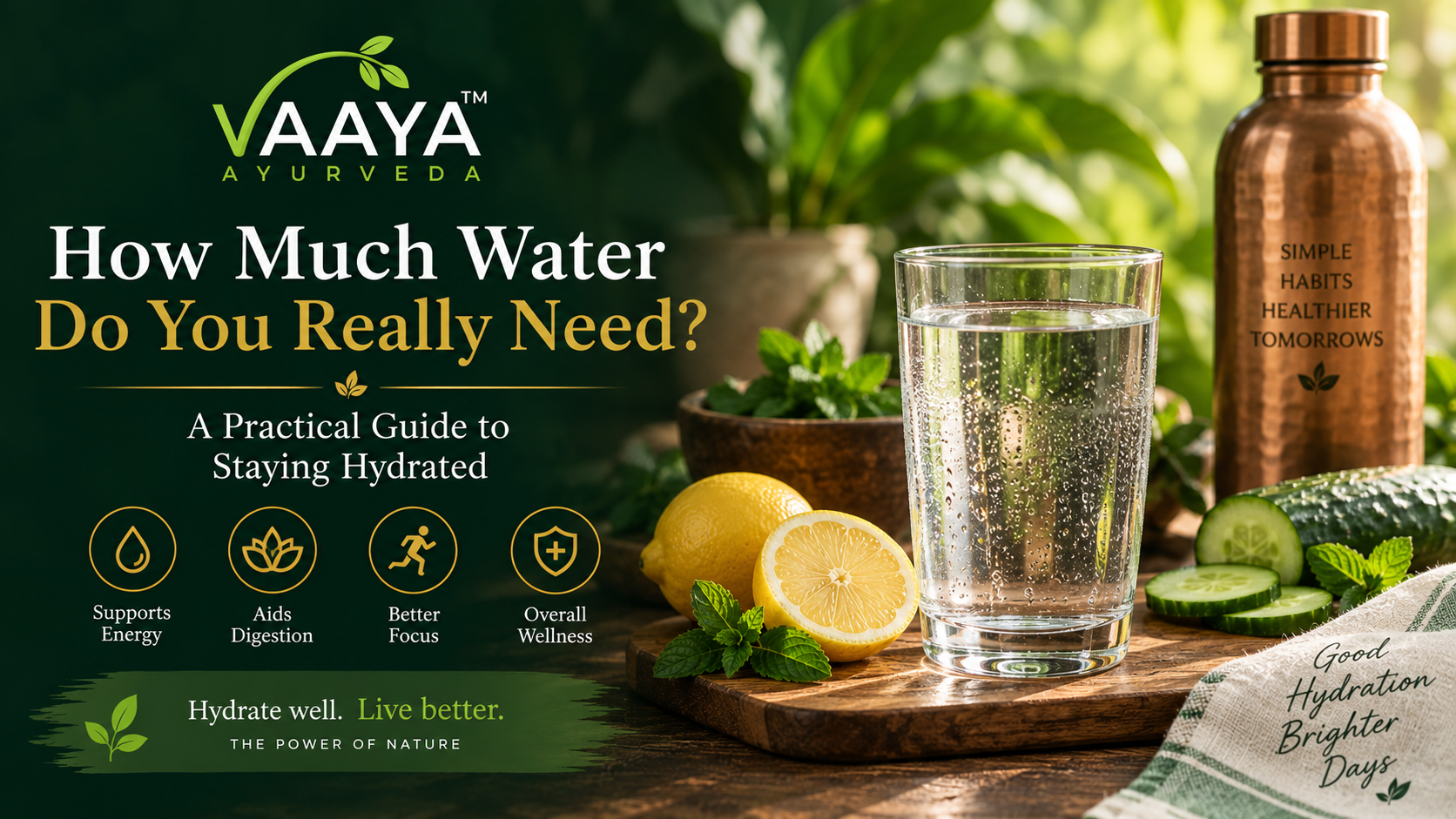
How Much Water Do You Really Need? A Practical Guide to Staying Hydrated
You need enough fluid to replace what your body loses throughout the day—but there is no universal rule that everyone must drink exactly eight glasses or a fixed number of litres.
Your hydration needs depend on several factors, including your body size, physical activity, climate, diet and whether you are losing additional fluids through sweating, vomiting or diarrhoea.
Water is the simplest choice, but fluids also come from other beverages and from water-rich foods. The National Academies notes that total water intake includes drinking water, other beverages and moisture present in food.
A practical approach is to drink regularly throughout the day and pay attention to signs that you may need more fluid. Pale-yellow urine is commonly used as a simple everyday indicator of adequate hydration.
Key Takeaways
• There is no single water target that suits everybody.
• Your hydration requirement changes with activity, temperature, diet and individual circumstances.
• Water is an excellent everyday beverage, but food and other drinks also contribute to total fluid intake.
• Sweating and prolonged physical activity increase fluid requirements.
• Pale-yellow urine is a useful practical indicator of hydration.
• Drinking excessively is not the goal. The goal is maintaining adequate hydration.
• If you have a medical condition that affects fluid balance, your fluid requirements may need individual medical advice.
Why Does Your Body Need Water?
Water is fundamental to life.
It is involved in maintaining body temperature, transporting nutrients and waste products, supporting blood volume and providing the environment in which countless biochemical reactions occur.
Your body is continuously losing water through urine, sweat, breathing and bowel movements. You therefore need regular fluid intake to maintain the body's water balance.
But hydration is not simply about drinking plain water.
Food contributes water too. Fruits, vegetables, soups, curd and many other foods contain substantial amounts of water.
This is one reason why two people eating different diets can have very different amounts of water coming from their food.
How Much Water Should You Drink?
This is where many hydration recommendations become unnecessarily rigid.
You may have heard rules such as:
"Drink exactly 3 litres."
"Drink eight glasses."
"Drink one litre for every X kilograms of body weight."
These can be useful as rough reminders, but they should not be treated as universal medical requirements.
The National Academies' reference values for total water intake include water from beverages as well as food, and explicitly note that individual needs vary. People who are physically active or exposed to hot environments may require more.
In other words, your body's water requirement is dynamic.
A person sitting in an air-conditioned office all day will not necessarily have the same requirement as someone exercising outdoors in the Indian summer.
A Better Way to Think About Hydration
Instead of asking:
"Have I reached my exact water target?"
ask:
"Am I drinking regularly and replacing the fluid I am losing?"
For most healthy adults, this is a much more practical way to approach hydration.
Drink throughout the day rather than trying to consume a very large quantity in a short period.
And remember that your requirements can change from one day to another.
When Do You Need More Water?
There are several situations in which your fluid needs can increase.
1. Hot Weather
Heat increases fluid loss through sweating.
This is particularly relevant in countries such as India, where temperatures can become very high during certain months.
On a hot day, you may need more fluid than you would on a cool day.
2. Exercise
Physical activity increases heat production and usually increases sweating.
The longer and more intense the activity, the greater your fluid losses may become.
If you exercise regularly, make hydration part of your routine rather than waiting until you feel extremely thirsty.
3. Heavy Sweating
A workout is not the only reason you may sweat heavily.
Outdoor work, travelling in hot weather, long walks and certain environmental conditions can all increase fluid losses.
Replace fluids according to how much you are losing.
4. Illness
Vomiting and diarrhoea can cause substantial fluid loss.
In these situations, hydration becomes particularly important, and oral rehydration solutions may be appropriate depending on the circumstances.
If dehydration is significant or symptoms are severe, medical attention may be necessary.
How Can You Tell If You Are Dehydrated?
Thirst is an obvious signal, but it isn't the only one.
Possible signs of dehydration include:
• Darker-than-usual urine
• Passing urine less frequently
• Dry mouth
• Tiredness
• Dizziness or light-headedness
• Increased thirst
The NHS recommends drinking enough during the day so that your urine is a pale colour.
However, urine colour is not a perfect diagnostic tool. Certain foods, supplements and medications can influence urine colour.
The bigger picture matters.
If you are consistently thirsty, unusually tired or experiencing other symptoms despite drinking adequately, it is worth discussing the situation with a healthcare professional.
Does Coffee Dehydrate You?
Coffee and tea are often treated as if they do not count toward hydration.
That is an oversimplification.
Caffeinated beverages do contribute to overall fluid intake. For most people, moderate caffeine consumption does not simply cancel out the water contained in the beverage.
That doesn't mean every beverage is equally healthy.
A large sugary soft drink may provide fluid, but it also delivers significant amounts of sugar and calories.
For everyday hydration, plain water remains a simple choice.
Can You Get Water From Food?
Absolutely.
Hydration doesn't come exclusively from a water bottle.
Fruits and vegetables can contribute meaningful amounts of water to the diet.
Foods such as:
• Watermelon
• Cucumber
• Oranges
• Tomatoes
• Soups
• Curd
• Other fresh fruits and vegetables
can all contribute to overall fluid intake.
This is another reason why a varied, minimally processed diet matters.
WHO recommends a diverse diet built around foods such as vegetables, fruits, whole grains, pulses, nuts and other nutritious foods.
Hydration is therefore connected to your overall dietary pattern—not just the number printed on your water bottle.
Hydration and Ayurveda
Ayurveda has traditionally placed considerable importance on daily routines, digestion and mindful eating and drinking.
The Ayurvedic approach is not simply about chasing a fixed number of litres.
It emphasises paying attention to the individual, the environment, digestion and daily routine.
Modern nutrition and Ayurvedic traditions use different frameworks, so they should not be treated as identical systems.
But there is a useful principle they can share:
Pay attention to your body's needs rather than following wellness rules blindly.
A healthy routine should be practical enough to sustain.
7 Simple Ways to Stay Hydrated
1. Start Your Day With Water
Having a glass of water when you wake up can be an easy way to begin your daily fluid intake.
You do not need to turn it into an elaborate ritual.
2. Keep Water Accessible
You are more likely to drink regularly when water is within reach.
Keep a bottle at your desk, in your bag or wherever you spend much of your day.
3. Drink With Meals
Water can naturally become part of your daily routine when you drink with meals.
4. Drink Before and After Exercise
If you are exercising, pay attention to your fluid intake before, during and after activity, especially in hot conditions or during prolonged workouts.
5. Eat Water-Rich Foods
Include fruits, vegetables, soups and other nutritious foods that contribute to total water intake.
6. Don't Rely Only on Thirst
Thirst is useful, but it should not be your only strategy during prolonged exercise or heavy sweating.
Build regular drinking into your routine.
7. Don't Obsess Over the Number
More water is not automatically better.
The goal is adequate hydration—not forcing yourself to consume huge amounts simply because someone told you that you "must" drink a particular quantity.
What About Drinking Too Much Water?
Hydration advice sometimes focuses entirely on drinking more.
But excessive water intake can also be problematic.
The National Academies notes that the kidneys have a finite capacity to excrete water, and excessive intake over a short period can overwhelm that capacity.
For most people, ordinary drinking habits are not a concern.
The important point is simply that more is not always better.
Avoid turning hydration into a competition.
Should You Add Lemon, Salt or Electrolytes to Water?
For everyday hydration, plain water is usually sufficient.
Electrolyte products can have a role in particular circumstances, especially when substantial fluid and electrolyte losses occur through prolonged exercise, heavy sweating or illness.
But adding salt, sugar, supplements or special ingredients to every glass of water is not necessary for most people.
Similarly, there is no need to turn ordinary hydration into an expensive wellness ritual.
Sometimes the simplest option is the best one.
Hydration Is Part of a Bigger Picture
Good hydration matters—but it should not become a substitute for everything else that supports health.
A healthy lifestyle also includes:
• A varied, nutritious diet
• Regular physical activity
• Adequate sleep
• Stress management
• Avoiding tobacco
• Moderating alcohol
• Maintaining a healthy body weight
WHO emphasises that healthy diets are built around adequacy, balance, moderation and diversity.
The same philosophy can be applied to hydration.
You don't need a complicated protocol.
You need a sustainable habit.
Frequently Asked Questions
Is 3 litres of water a day necessary?
Not necessarily.
Your total fluid requirement depends on factors such as body size, activity, climate, diet and fluid losses. Also remember that total water intake includes water from food and beverages—not just plain drinking water.
Is 8 glasses of water enough?
Eight glasses can be a useful general reminder, but it isn't a universal requirement. Some people will need more, while others may need less.
Does tea and coffee count toward hydration?
Yes. Tea and coffee contribute to overall fluid intake. However, water and other low-sugar beverages are generally better everyday choices than sugary drinks.
What colour should urine be?
Pale-yellow urine is generally considered a useful sign that you are drinking enough. Very dark urine can be a sign that you need more fluid, although urine colour can be influenced by other factors.
Should I drink more water when exercising?
Usually, yes—particularly during prolonged exercise, heavy sweating or hot weather. Fluid needs increase when you lose more water through sweat.
Can drinking too much water be harmful?
Yes. Excessive water consumption, particularly over a short period, can disturb the body's electrolyte balance. Hydration should be adequate rather than excessive.
Is warm water better than cold water?
There is no need to believe that one temperature is universally superior. Choose the temperature that makes it comfortable for you to drink regularly.
Is drinking water on an empty stomach beneficial?
Drinking water in the morning is a simple way to begin your daily fluid intake. However, there is no need to attribute extraordinary health benefits to the practice.
Final Thoughts
Hydration does not need to be complicated.
Your body continuously loses water, and drinking regularly helps replace those losses. But the amount you need is not a fixed number that applies equally to everyone.
Drink regularly.
Eat a varied diet.
Increase your intake when you are sweating heavily or spending time in hot conditions.
Pay attention to your body's signals.
And don't confuse "more water" with "more health."
Good wellness is rarely about one magic number.
It is about building sensible habits that work together.
The Power of Nature begins with understanding the needs of your own body.
Quality & Transparency
Vaaya believes wellness information should be practical, responsible and evidence-informed.
This article is intended for general educational purposes and is not a substitute for personalised medical advice.
People with kidney, heart or liver conditions, or those taking medicines that affect fluid balance, may have specific fluid requirements and should follow advice from their healthcare professional.
If you experience persistent excessive thirst, very low urine output, significant dizziness, confusion or other concerning symptoms, seek appropriate medical advice.
About Vaaya
Vaaya Ayurveda believes in bringing the wisdom of nature into modern everyday wellness.
Our philosophy is simple:
The Power of Nature.
We believe traditional knowledge is most valuable when approached with care, transparency and respect for modern evidence.
Sources
• World Health Organization (WHO) — Healthy Diet
• National Academies — Dietary Reference Intakes for Water, Potassium, Sodium, Chloride, and Sulfate
• NHS — Water, Drinks and Hydration
• NHS — Dehydration
• National Institute of Diabetes and Digestive and Kidney Diseases (NIDDK) — Eating, Diet & Nutrition for Constipation
Begin your Shilajit ritual
Vaaya Shilajit is sourced from high-altitude Himalayan rock, purified the traditional Ayurvedic way, and lab-tested for heavy metals. Whether you start with the pure resin, the gold resin, or the travel-friendly capsules, consistency is what changes how you feel.
Questions? Write to us at care@vaayaayurveda.com
Related reading
 Holistic Wellness31 Aug 202611 min read
Chronic Inflammation: What It Means and How Lifestyle Can Help
Inflammation is a natural part of the body's defence system. The problem arises when inflammatory processes remain active for too long. Discover what chronic inflammation means and which everyday habits can support a healthier, more balanced lifestyle.
Read article Sleep & Wellness29 Aug 202611 min read
The Power of Sleep: Why Rest Is Essential for Your Health
Sleep is not simply time spent doing nothing. It is an active biological process that supports the brain, metabolism, mood, immunity and physical recovery. Learn how better sleep can become one of the simplest foundations of everyday wellness.
Read article Metabolic Health28 Aug 202611 min read
How to Support a Healthy Metabolism: What Actually Matters
Your metabolism is more than how quickly you burn calories. It is the complex network of processes that keeps your body functioning every day. Discover the practical habits that can support metabolic health without extreme diets or quick fixes.
Read article