
Weight Loss Without the Extremes: A Sustainable Ayurvedic Approach to a Healthier Body
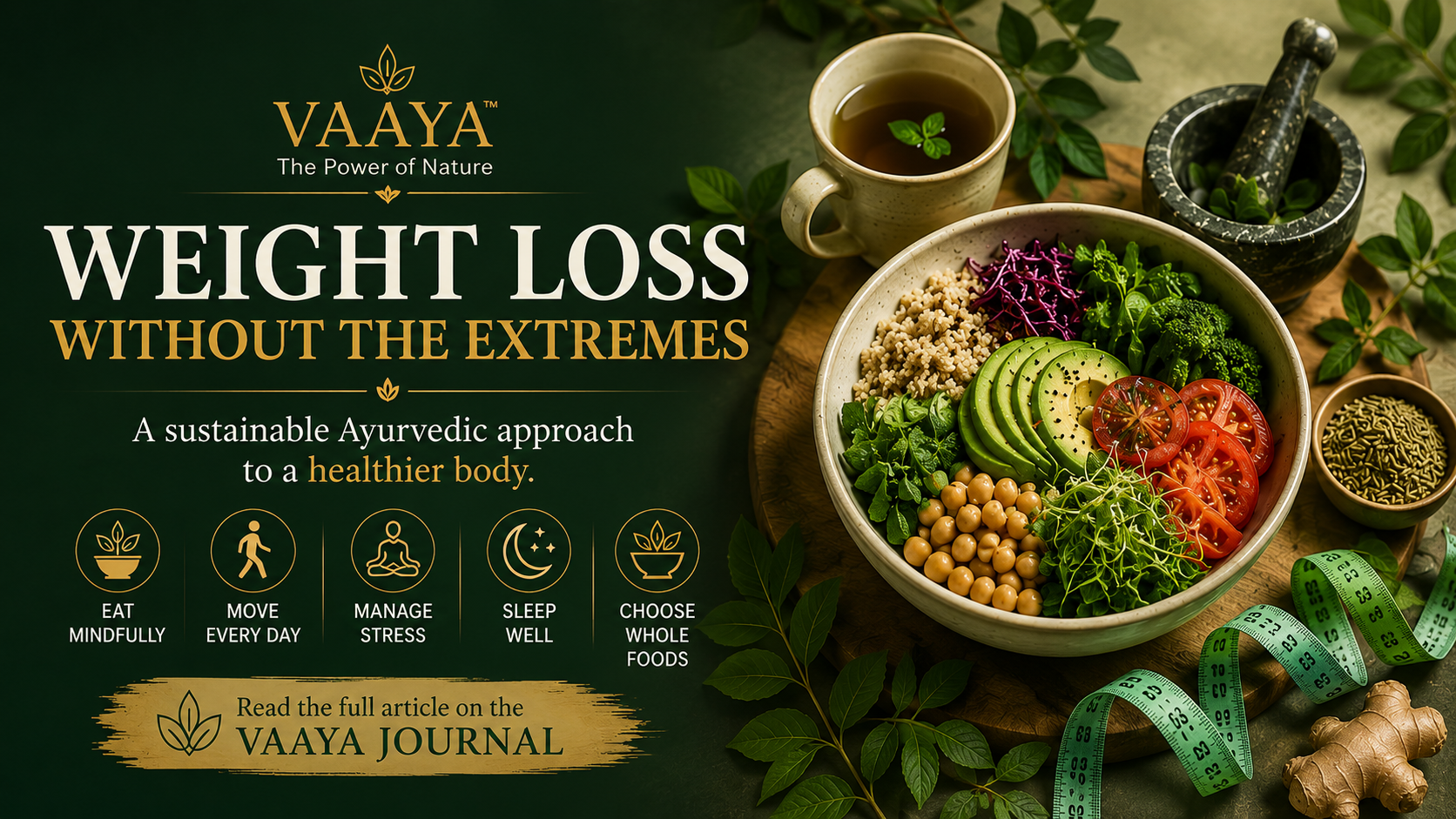
Healthy weight loss is rarely about a drastic diet or eliminating one particular food. It is usually the result of creating sustainable changes in eating habits, physical activity, sleep, and daily routines.
From an Ayurvedic perspective, weight management is also approached as part of overall balance rather than simply a number on the weighing scale.
Modern health guidance similarly emphasizes sustainable eating patterns, regular physical activity, realistic goals, and long-term behavioural changes rather than quick fixes. :contentReference[oaicite:0]{index=0}
Key Takeaways
- Sustainable weight loss is more effective than extreme dieting.
- Food quality and portion sizes both matter.
- Regular physical activity supports weight management and overall health.
- Adequate sleep and stress management are important parts of a healthy lifestyle.
- Whole and minimally processed foods can form the foundation of a balanced diet.
- Ayurveda traditionally views digestion, routine, and individual constitution as important aspects of wellbeing.
- A realistic goal is more useful than chasing rapid changes on the weighing scale.
- Weight-loss supplements should never replace a balanced diet and active lifestyle.
Why Sustainable Weight Loss Matters
The internet is filled with promises of losing weight quickly.
Seven-day diets. Juice cleanses. Extremely low-calorie plans. Fat-burning drinks. Supplements promising effortless transformation.
The problem is that rapid weight loss strategies are often difficult to maintain.
A more useful question is not:
"How can I lose weight as quickly as possible?"
but:
"What changes can I continue for the next year?"
Successful weight-management approaches generally combine a healthy eating plan, physical activity, behavioural support, and strategies for maintaining progress over time. :contentReference[oaicite:1]{index=1}
Weight Loss Is About More Than Calories
Energy balance plays an important role in body weight.
When the body consistently receives more energy from food and beverages than it uses, weight gain can occur. Creating an appropriate energy deficit through eating patterns and physical activity can contribute to weight loss. :contentReference[oaicite:2]{index=2}
However, this does not mean that every calorie needs to be obsessively counted.
Food quality, portion sizes, satiety, activity levels, sleep, stress, and individual circumstances all influence how sustainable a person's routine becomes.
The goal should be to create a pattern that is nutritionally adequate and realistic.
What Should You Eat When Trying to Lose Weight?
A weight-loss diet does not have to mean eating only salads.
A balanced eating pattern can include:
- Vegetables
- Fruits
- Whole grains
- Pulses and legumes
- Nuts and seeds
- Protein-rich foods
- Appropriate amounts of healthy fats
- Dairy or suitable alternatives
The World Health Organization recommends diets based on variety, balance, moderation, and diversity, with minimally processed and unprocessed foods forming an important foundation. :contentReference[oaicite:3]{index=3}
For an Indian diet, this can be surprisingly practical.
Dal, vegetables, roti, rice, curd, fruits, nuts, sprouts, paneer, eggs, fish, or other protein sources can all have a place in a balanced eating pattern.
Weight loss does not require abandoning traditional foods.
It often requires becoming more intentional about portions, preparation, frequency, and overall dietary balance.
The Importance of Portion Control
Even nutritious foods can contribute significant calories when consumed in very large quantities.
Instead of completely eliminating foods you enjoy, consider:
- Using slightly smaller portions.
- Eating slowly.
- Avoiding distracted eating.
- Paying attention to hunger and fullness.
- Limiting frequent snacking when you are not actually hungry.
- Reducing sugary beverages.
- Being mindful of calorie-dense sauces, fried foods, and snacks.
Small changes repeated consistently can be easier to maintain than dramatic restrictions.
What Does Ayurveda Say About Weight Management?
Ayurveda traditionally places considerable emphasis on digestion, daily routine, food choices, and individual constitution.
Classical Ayurvedic approaches do not reduce wellbeing to body weight alone.
Factors such as Agni, or digestive capacity, lifestyle patterns, activity, sleep, and the suitability of foods to the individual are considered within the broader Ayurvedic framework.
This is one reason Ayurveda tends to emphasize routine and balance rather than a universal diet that supposedly works for everyone.
However, traditional concepts should complement—not replace—modern nutritional and medical understanding.
Movement Is Essential
Exercise is not merely a tool for burning calories.
Regular physical activity supports cardiovascular fitness, muscular strength, metabolic health, mood, and the ability to maintain a healthy body weight. :contentReference[oaicite:4]{index=4}
For adults, WHO recommends at least 150 minutes of moderate-intensity physical activity per week, or an equivalent amount of more vigorous activity. :contentReference[oaicite:5]{index=5}
You do not necessarily need an elaborate gym routine.
Walking, cycling, swimming, strength training, yoga, sports, dancing, and active daily routines can all contribute to a more active lifestyle.
The best activity is often the one you can continue doing.
Don't Ignore Strength Training
When people think about weight loss, they often focus exclusively on cardio.
Strength training deserves attention too.
Resistance exercise can help maintain and develop muscle while you work toward a healthier body composition.
A balanced routine can therefore combine:
- Walking or other aerobic activity
- Strength training
- Mobility work
- Regular movement throughout the day
The objective is not simply to make the number on the scale smaller.
It is to build a stronger, healthier and more capable body.
Sleep and Weight Management
Sleep is often overlooked when discussing weight.
Yet healthy weight management is part of a broader lifestyle that includes adequate sleep and stress management. :contentReference[oaicite:6]{index=6}
Poor sleep can make healthy routines harder to maintain.
When you are tired, cooking a balanced meal, exercising, and controlling unnecessary snacking can all become more difficult.
Creating a consistent sleep routine is therefore a simple but valuable part of a sustainable wellness plan.
What About Sugar?
Sugary beverages and foods high in free sugars can make it easier to consume more calories without feeling particularly full.
WHO recommends limiting free sugars as part of a healthy dietary pattern. :contentReference[oaicite:7]{index=7}
This does not mean that every sweet food must permanently disappear from your diet.
A more sustainable approach is to make highly sugary foods and drinks occasional rather than routine.
For example:
Choose water instead of a sugary beverage.
Choose fruit more often than a highly processed dessert.
Choose unsweetened or lightly sweetened drinks more frequently.
Small substitutions can accumulate over time.
What About "Fat-Burning" Foods?
There is no single food that can magically melt body fat.
Green tea, spices, herbs, lemon water, or other popular wellness ingredients may have a place in a healthy routine, but they should not be presented as substitutes for appropriate nutrition and physical activity.
Weight management is fundamentally a lifestyle process.
No individual ingredient can compensate for consistently excessive calorie intake, inadequate activity, poor sleep, or an unsustainable routine.
Can Ayurvedic Herbs Help With Weight Loss?
Ayurvedic herbs are traditionally used for a variety of purposes, but they should not automatically be treated as weight-loss agents.
The evidence for many herbal products marketed specifically for weight loss is limited, and supplements can vary considerably in quality.
If you are considering an Ayurvedic or herbal supplement while trying to lose weight, choose products from transparent manufacturers and discuss their use with a qualified healthcare professional—particularly if you take medication or have an existing medical condition.
Supplements should complement a healthy lifestyle, not replace it.
Set a Realistic Goal
You do not need to transform your body in four weeks.
A realistic first goal can be much more useful.
NIDDK notes that an initial weight-loss target of around 5–10% of starting body weight over six months is commonly recommended in structured weight-management approaches. :contentReference[oaicite:8]{index=8}
The exact goal should depend on your individual health, starting weight, age, medical history, and professional advice.
Focus on progress rather than perfection.
Five Habits That Can Make Weight Management Easier
1. Build meals around whole foods
Include vegetables, fruits, pulses, whole grains, and appropriate protein sources regularly.
2. Watch liquid calories
Water is often the simplest everyday beverage choice.
3. Move every day
Exercise sessions are valuable, but so is avoiding prolonged inactivity throughout the day.
4. Sleep consistently
Create a regular sleep routine and treat sleep as part of your wellness plan.
5. Think long term
A routine that works for three years is more valuable than a diet that works for three weeks.
Frequently Asked Questions
What is the fastest way to lose weight?
Rapid weight-loss promises should be approached cautiously. A sustainable approach generally focuses on healthier eating, appropriate calorie intake, physical activity, and behavioural changes rather than extreme restriction. :contentReference[oaicite:9]{index=9}
Can I lose weight without exercising?
Dietary changes can contribute to weight loss, but regular physical activity provides important health benefits and can help with maintaining weight loss. :contentReference[oaicite:10]{index=10}
Do I need to stop eating rice to lose weight?
Not necessarily. Rice can be part of a balanced diet. Portion size, preparation, accompanying foods, and your overall energy intake matter more than declaring one traditional food completely off-limits.
Is skipping meals a good way to lose weight?
Skipping meals is not automatically a better weight-loss strategy. The more important consideration is whether your overall eating pattern provides appropriate nutrition while supporting a sustainable energy balance.
Can I eat sweets while trying to lose weight?
Small amounts of favourite foods can fit into a healthy weight-management plan. NIDDK specifically notes that people do not necessarily have to give up all their favourite foods when trying to lose weight. :contentReference[oaicite:11]{index=11}
How long does healthy weight loss take?
There is no universal timeline. Your rate of progress depends on factors including starting weight, diet, activity, sleep, health conditions, medications, and adherence to the plan.
Can Shilajit help me lose weight?
Shilajit should not be considered a weight-loss treatment. If you choose to use purified Shilajit, treat it as part of a broader wellness routine rather than as a substitute for nutrition, exercise, sleep, or professional weight-management care.
Final Thoughts
Healthy weight loss is not a competition.
It is a gradual process of creating better habits and allowing those habits to become part of everyday life.
Eat mostly nourishing foods.
Move regularly.
Sleep adequately.
Be mindful of portions.
Limit highly processed and sugary foods.
And give your body time.
Ayurveda's emphasis on routine and balance can provide a useful traditional perspective, while modern nutritional science reminds us that sustainable weight management depends on the broader pattern of food intake, physical activity, and behaviour.
The goal should not simply be to weigh less.
The goal is to live better in the body you are building.
Quality & Transparency
This article is intended for educational purposes only and should not be considered medical advice. Weight management is highly individual. If you have obesity, an eating disorder, diabetes, cardiovascular disease, are pregnant or breastfeeding, take medication, or have another medical condition, consult a qualified healthcare professional before making significant dietary or exercise changes.
About Vaaya
At Vaaya, we believe that authentic wellness begins with trust.
Our approach brings together the wisdom of Ayurveda, responsible modern wellness practices, and transparent information to help people make more informed choices.
We believe wellness should not be built around extremes.
It should be built around consistency, balance, quality, and respect for the body.
The Power of Nature.
Sources
- World Health Organization (WHO) — Obesity and Overweight
- World Health Organization (WHO) — Healthy Diet
- World Health Organization (WHO) — Physical Activity
- National Institute of Diabetes and Digestive and Kidney Diseases (NIDDK) — Treatment for Overweight & Obesity
- National Institute of Diabetes and Digestive and Kidney Diseases (NIDDK) — Choosing a Safe & Successful Weight-Loss Program
- National Institute of Diabetes and Digestive and Kidney Diseases (NIDDK) — Health Tips for Adults
Begin your Shilajit ritual
Vaaya Shilajit is sourced from high-altitude Himalayan rock, purified the traditional Ayurvedic way, and lab-tested for heavy metals. Whether you start with the pure resin, the gold resin, or the travel-friendly capsules, consistency is what changes how you feel.
Questions? Write to us at care@vaayaayurveda.com
Related reading
 Everyday Wellness28 Sept 202610 min read
Your Body Has a Clock: How Daily Routines Affect Your Health
Your body follows a natural 24-hour rhythm that influences when you feel awake, sleepy, hungry and ready to rest. Discover how everyday habits such as morning light, meal timing, movement and consistent sleep can help support your body's internal clock.
Read article Digestive Wellness7 Sept 202611 min read
Dietary Fibre: Why Your Gut Needs More Than Just Roughage
Dietary fibre is more than something that keeps digestion moving. From whole grains and pulses to fruits, vegetables, nuts and seeds, fibre-rich foods can support digestive health and form an important part of a balanced diet.
Read article Healthy Ageing5 Sept 202610 min read
Healthy Ageing: 8 Everyday Habits That Help You Age Well
Ageing is inevitable, but how we age is influenced by many factors. Discover eight practical habits that can support physical health, mental wellbeing, mobility and independence as you grow older.
Read article