
Your Scalp Is the Foundation of Healthy Hair: Why Scalp Health Matters
Direct Answer
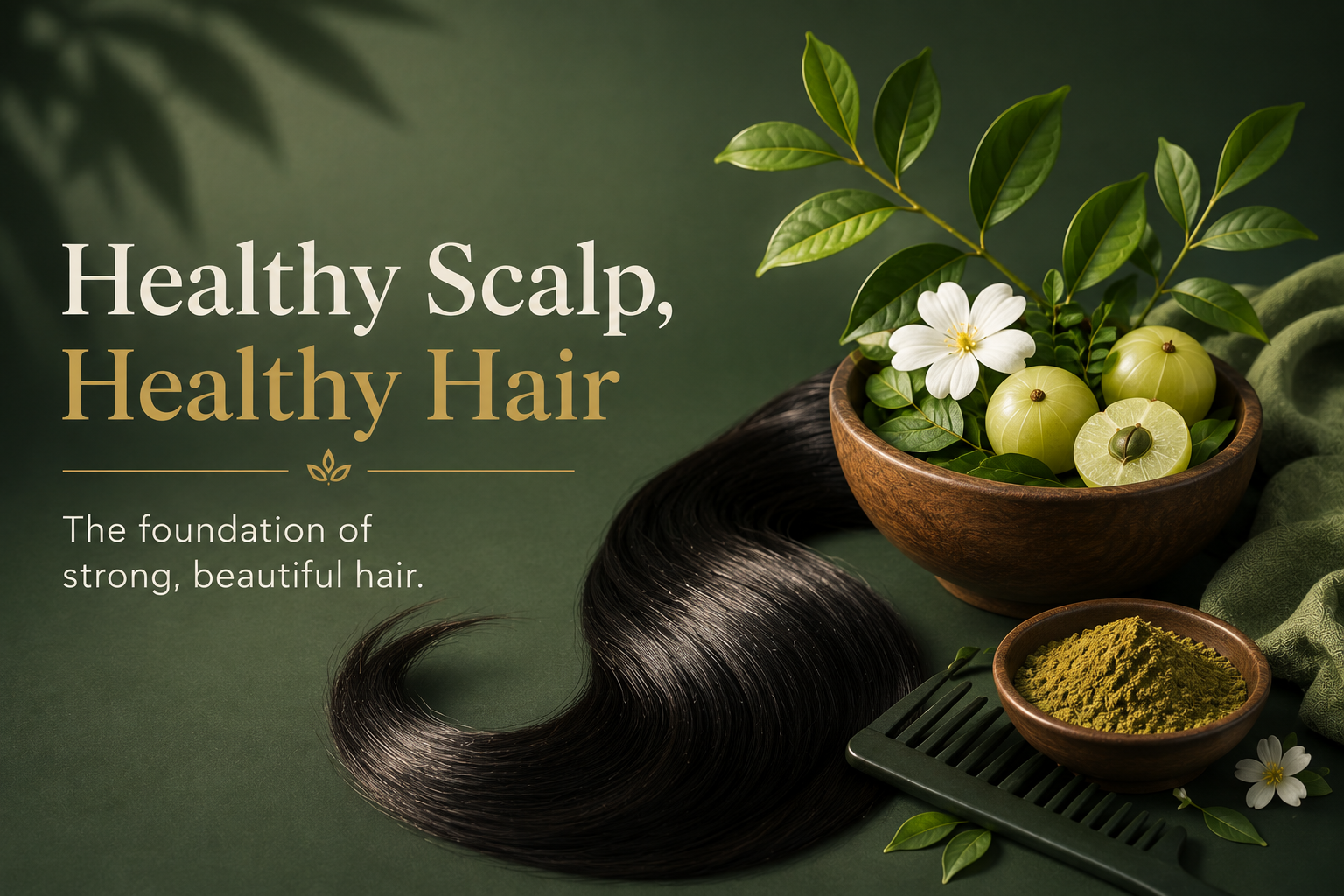
Healthy hair begins with a healthy scalp.
The scalp is not simply the surface from which hair grows. It is a living biological environment containing hair follicles, sebaceous glands, blood vessels, immune cells and a diverse community of microorganisms.
Emerging research suggests that changes in this environment—including alterations in the scalp microbiome and inflammation—may influence conditions associated with hair loss. At the same time, nutrition, lifestyle, ageing and hair-care practices can all contribute to the condition of the hair and scalp.
The practical message is simple:
If you want to care for your hair, don't focus only on the hair strand. Start with the scalp.
Key Takeaways
- Hair follicles live within the scalp, making scalp health fundamental to hair health.
- The scalp has its own microbiome that may influence inflammation and dermatological conditions.
- Hair health is influenced by nutrition, lifestyle, genetics, ageing and external hair-care practices.
- Excessive cleansing, harsh treatments and unnecessary chemical exposure may damage the hair fibre and affect scalp comfort.
- Nutritional deficiencies can contribute to some forms of hair loss, but taking supplements without a demonstrated deficiency is not necessarily beneficial.
- Ayurveda has traditionally emphasized regular cleansing, oiling and gentle care as part of hair-care routines.
- Persistent hair loss, itching, scaling or sudden changes should be evaluated by a qualified healthcare professional.
Main Article
Your Hair Is Not Just Your Hair
When people notice changes in their hair, the first instinct is usually to look at the hair itself.
Is it thinner?
Is it falling?
Is it becoming dry?
Are there more grey strands?
But the visible hair fibre is actually the end product of a process taking place beneath the skin.
Every hair begins inside a follicle.
That makes the scalp an important part of the story.
Research into hair ageing increasingly describes hair health as a multifactorial process involving the follicle, inflammation, oxidative stress, nutrition, lifestyle and ageing rather than a single isolated cause. :contentReference[oaicite:1]{index=1}
This is why a good hair-care routine should begin at the scalp.
The Scalp Is a Living Ecosystem
Your scalp is home to a complex community of microorganisms.
This is known as the scalp microbiome.
These microorganisms are not automatically harmful. In a healthy environment, they exist as part of the normal ecosystem of the skin.
The balance can change, however.
Research has associated alterations in the scalp microbiome with conditions such as dandruff, seborrheic dermatitis and certain forms of alopecia. :contentReference[oaicite:2]{index=2}
More recent research published in 2026 has specifically examined microbiome differences in androgenetic alopecia.
Researchers found preliminary evidence of altered microbial communities in people with androgenetic alopecia, including greater abundance of Cutibacterium acnes in affected males. However, the evidence is still emerging, and microbiome changes should not be interpreted as proof that a particular microorganism causes hair loss. :contentReference[oaicite:3]{index=3}
That distinction matters.
The science is promising—but it is still developing.
Why Scalp Health Can Affect Hair Quality
Hair follicles are living structures.
The hair shaft that eventually emerges from the scalp is largely made of keratin and is no longer living tissue in the same sense as the follicle itself.
This explains why applying a product to the hair fibre can improve its appearance without necessarily changing the underlying biology of hair growth.
A conditioner may make hair smoother.
An oil may reduce the feeling of dryness.
A colour treatment may change the appearance of grey hair.
But the follicle remains beneath the scalp.
Long-term hair health therefore requires looking beyond cosmetic appearance.
Nutrition Matters—But More Is Not Better
Hair growth requires energy and nutrients.
Research has investigated the relationship between hair health and nutrients including:
- Iron
- Vitamin D
- Zinc
- Selenium
- Vitamin B-group nutrients
- Vitamin A
- Vitamin C
A systematic review examining micronutrients and androgenetic alopecia found associations between several micronutrients and hair health, particularly vitamin B nutrients, vitamin D, iron and zinc. However, the authors also noted that the evidence is not completely consistent across studies. :contentReference[oaicite:4]{index=4}
A broader systematic review examining dietary factors and hair health similarly found associations involving vitamin D and iron, while noting the need for additional research. :contentReference[oaicite:5]{index=5}
This leads to an important principle:
Correcting a deficiency is different from taking large amounts of a nutrient.
More vitamins do not automatically mean more hair.
In fact, unnecessary supplementation can sometimes create its own problems.
A balanced diet is therefore a better starting point than indiscriminately taking hair supplements.
What About Premature Greying?
Grey hair is one of the most visible changes associated with ageing.
But premature greying can have several contributing factors.
A 2025 review described premature hair graying as a multifaceted phenomenon influenced by genetics, biological factors, environmental exposures, oxidative stress and lifestyle factors such as smoking and diet. :contentReference[oaicite:6]{index=6}
Research has also investigated associations between premature greying and nutritional markers such as ferritin and vitamin B12 in younger Indian populations. These findings are associations, however, and do not mean that correcting one nutrient will necessarily restore natural hair colour. :contentReference[oaicite:7]{index=7}
Once a follicle loses its ability to produce pigment, reversing established grey hair remains difficult.
This is why nutritional adequacy and healthy habits are better viewed as part of prevention and overall wellbeing—not as guaranteed ways to reverse greying.
Ayurveda and the Tradition of Hair Oiling
Hair oiling has been part of traditional Indian hair-care practices for generations.
Ayurvedic approaches have historically emphasized regular routines, scalp massage and the use of botanical preparations.
From a modern perspective, oiling can have a practical cosmetic role.
It may help reduce the sensation of dryness, improve hair manageability and reduce friction during grooming.
But it is important not to confuse cosmetic benefits with evidence of hair regrowth.
An oil can condition the hair without necessarily changing the biological causes of androgenetic alopecia.
This distinction allows us to appreciate traditional practices without making claims that current evidence cannot support.
Should You Oil Your Scalp Every Day?
Not necessarily.
There is no universal requirement for daily scalp oiling.
The appropriate routine depends on:
- Scalp type
- Hair texture
- Climate
- Frequency of washing
- Personal preference
- Presence of dandruff or scalp conditions
Someone with a dry scalp may enjoy occasional oiling.
Someone prone to an oily or dandruff-prone scalp may find heavy oiling uncomfortable.
The goal is not to follow a rigid ritual.
The goal is to understand your scalp and choose a routine that keeps it comfortable and clean.
Cleansing Is Part of Scalp Care
A healthy scalp does not mean avoiding shampoo.
Cleansing removes excess sebum, sweat, environmental particles and product buildup.
The ideal frequency varies from person to person.
There is no universal rule that everyone should wash their hair every day—or that everyone should avoid frequent washing.
What matters is whether your routine keeps the scalp comfortable without causing excessive dryness or irritation.
Hair-care products should also be selected according to individual needs rather than marketing claims.
Older reviews of hair health have highlighted the potential impact of external factors—including environmental exposure, nutrition and some hair-care chemicals—on hair condition. :contentReference[oaicite:8]{index=8}
Don't Confuse Hair Fall With Hair Breakage
This is one of the most important distinctions in hair care.
Hair shedding occurs when a hair naturally leaves the follicle.
Hair breakage occurs when the hair fibre snaps somewhere along its length.
They can look similar when you see hair in your comb.
But they have different causes.
Breakage may be associated with:
- Excessive heat
- Chemical processing
- Rough brushing
- Tight hairstyles
- Mechanical friction
- Damaged or dry hair fibres
Hair shedding, on the other hand, can have many biological causes.
Understanding the difference can prevent you from treating the wrong problem.
The Role of Stress
Stress does not explain every case of hair loss.
However, significant physiological or psychological stress can be associated with temporary increases in hair shedding in some people.
This is another reason hair health should be viewed holistically.
Sleep, nutrition, exercise, stress management and general health all contribute to the environment in which the hair follicle operates.
Hair is therefore sometimes a reflection of broader wellbeing—not simply a cosmetic feature.
What a Simple Scalp-Care Routine Can Look Like
You do not need a bathroom shelf filled with products.
A simple routine may be enough.
Step 1: Cleanse According to Your Scalp
Wash often enough to keep your scalp comfortable and free from excessive buildup.
Do not follow someone else's washing schedule blindly.
Step 2: Be Gentle
Avoid aggressive scratching and unnecessarily vigorous towel drying.
Treat wet hair carefully because it is more vulnerable to mechanical damage.
Step 3: Condition the Hair Fibre
Conditioner is primarily about the hair itself rather than the follicle.
Use it to improve manageability and reduce friction.
Step 4: Use Oils Thoughtfully
If oiling works well for your hair and scalp, incorporate it into your routine.
It does not need to be excessive.
A small, consistent ritual can be more practical than heavy applications.
Step 5: Eat for Your Whole Body
Rather than searching for a single "hair food," build a diet that provides adequate:
- Protein
- Vegetables
- Fruits
- Whole grains
- Healthy fats
- Essential vitamins and minerals
Your follicles need the same nutritional foundation as the rest of your body.
What About Herbal Hair-Care Ingredients?
Interest in botanical ingredients for hair care is growing.
A recent 2026 review examined medicinal plants and phytochemicals investigated for alopecia, including ingredients such as Eclipta alba, Phyllanthus emblica, Bacopa monnieri and others. The review identified promising laboratory, animal and some clinical evidence but also emphasized the need for further clinical trials and standardization. :contentReference[oaicite:9]{index=9}
This is an important distinction.
A plant having a plausible biological mechanism or promising laboratory results does not automatically mean that a particular commercial formulation has been clinically proven to regrow hair.
At Vaaya, we believe traditional ingredients deserve respect—but also responsible claims.
When Should You See a Dermatologist?
Not every hair concern requires medical treatment.
But certain changes should not simply be dismissed as "normal hair fall."
Consider professional evaluation if you experience:
- Sudden or rapid hair loss
- Clearly visible patches
- Persistent scalp inflammation
- Severe itching or scaling
- Pain or tenderness
- Receding hairline with progressive thinning
- Rapidly increasing crown thinning
- Sudden changes in hair texture or density
And if hair loss is persistent, identifying the underlying cause is usually more useful than continuously changing cosmetic products.
Frequently Asked Questions
Does a healthy scalp guarantee healthy hair?
No.
Genetics, hormones, ageing, nutrition, medical conditions and other factors can influence hair growth. A healthy scalp provides a supportive environment but cannot eliminate every cause of hair loss.
Can scalp oiling stop hair loss?
There is not enough evidence to claim that ordinary scalp oiling can stop androgenetic hair loss.
Oiling may improve the feel and manageability of hair and can be part of a personal grooming routine, but it should not be presented as a proven treatment for medical hair-loss conditions.
Is the scalp microbiome important?
The scalp microbiome appears to play a role in maintaining scalp homeostasis and is being investigated in conditions including dandruff and alopecia. However, research into its exact role in hair loss is still developing. :contentReference[oaicite:10]{index=10}
Can vitamins regrow hair?
Only certain nutritional deficiencies are clearly relevant to specific types of hair problems. Taking supplements without a demonstrated deficiency is not guaranteed to improve hair growth.
Is hair loss always caused by DHT?
No.
Androgenetic alopecia is associated with androgen sensitivity and follicular miniaturization, but hair loss has many possible causes.
Nutrition, autoimmune disease, stress-related shedding, medications, scalp disorders and other conditions can also contribute.
Can herbal ingredients help hair health?
Some botanical ingredients have promising experimental or early clinical evidence, but the strength of evidence varies considerably between ingredients and formulations. More high-quality clinical research is needed before broad claims can be made. :contentReference[oaicite:11]{index=11}
Final Thoughts
Healthy hair does not begin with a miracle product.
It begins with the environment in which the hair grows.
Your scalp, nutrition, sleep, stress, genetics, hormones and daily hair-care habits all form part of the picture.
Ayurveda has long emphasized the importance of routine and mindful self-care. Modern research is increasingly moving toward a similarly multifactorial view of hair health—looking beyond individual products and considering the scalp, follicle, nutrition, lifestyle and ageing together.
So instead of asking only:
"What should I put on my hair?"
it may be worth asking:
"What does my scalp and my body need for healthy hair to grow?"
That is a much better place to begin.
Quality & Transparency
This article is intended for educational purposes only and should not be considered medical advice.
Hair loss can have multiple causes, and individual diagnosis may require examination and appropriate testing. Traditional Ayurvedic practices and botanical ingredients should not be considered substitutes for professional medical treatment where a medical condition is suspected.
About Vaaya
At Vaaya, we believe authentic wellness begins with trust.
Our philosophy combines the wisdom of Ayurveda with a modern commitment to responsible, evidence-informed wellness.
We believe natural ingredients can have an important place in everyday care—but they should be understood honestly, without exaggerated promises.
Because healthy hair is not about chasing perfection.
It is about taking care of the foundation.
Sources
- Gupta KG et al. “Scalp Microbiome Alterations in Androgenetic Alopecia: Patterns and Emerging Mechanistic Insights.” International Journal of Dermatology, 2026. PubMed.
- “A novel framework for integrative hair longevity management.” European Journal of Dermatology, 2026. PubMed.
- “Pharmacological Insights into Medicinal Plants and Phytomolecules for the Management of Alopecia with Mechanistic Perspectives and Therapeutic Potential.” Current Pharmaceutical Design, 2026. PubMed.
- “Assessing the relationship between dietary factors and hair health: A systematic review.” Nutrition and Health, 2025. PubMed.
- Desai DD et al. “Premature hair graying: a multifaceted phenomenon.” International Journal of Dermatology, 2025. PubMed.
- “Micronutrients and Androgenetic Alopecia: A Systematic Review.” Molecular Nutrition & Food Research, 2024. PubMed.
- “Scalp microbiome: a guide to better understanding scalp diseases and treatments.” Archives of Dermatological Research, 2024. PubMed.
Begin your Shilajit ritual
Vaaya Shilajit is sourced from high-altitude Himalayan rock, purified the traditional Ayurvedic way, and lab-tested for heavy metals. Whether you start with the pure resin, the gold resin, or the travel-friendly capsules, consistency is what changes how you feel.
Questions? Write to us at care@vaayaayurveda.com
Related reading
 Everyday Wellness28 Sept 202610 min read
Your Body Has a Clock: How Daily Routines Affect Your Health
Your body follows a natural 24-hour rhythm that influences when you feel awake, sleepy, hungry and ready to rest. Discover how everyday habits such as morning light, meal timing, movement and consistent sleep can help support your body's internal clock.
Read article Digestive Wellness7 Sept 202611 min read
Dietary Fibre: Why Your Gut Needs More Than Just Roughage
Dietary fibre is more than something that keeps digestion moving. From whole grains and pulses to fruits, vegetables, nuts and seeds, fibre-rich foods can support digestive health and form an important part of a balanced diet.
Read article Healthy Ageing5 Sept 202610 min read
Healthy Ageing: 8 Everyday Habits That Help You Age Well
Ageing is inevitable, but how we age is influenced by many factors. Discover eight practical habits that can support physical health, mental wellbeing, mobility and independence as you grow older.
Read article