
Morning Light and Men’s Health: Could Your Daily Light Exposure Matter for Testosterone?
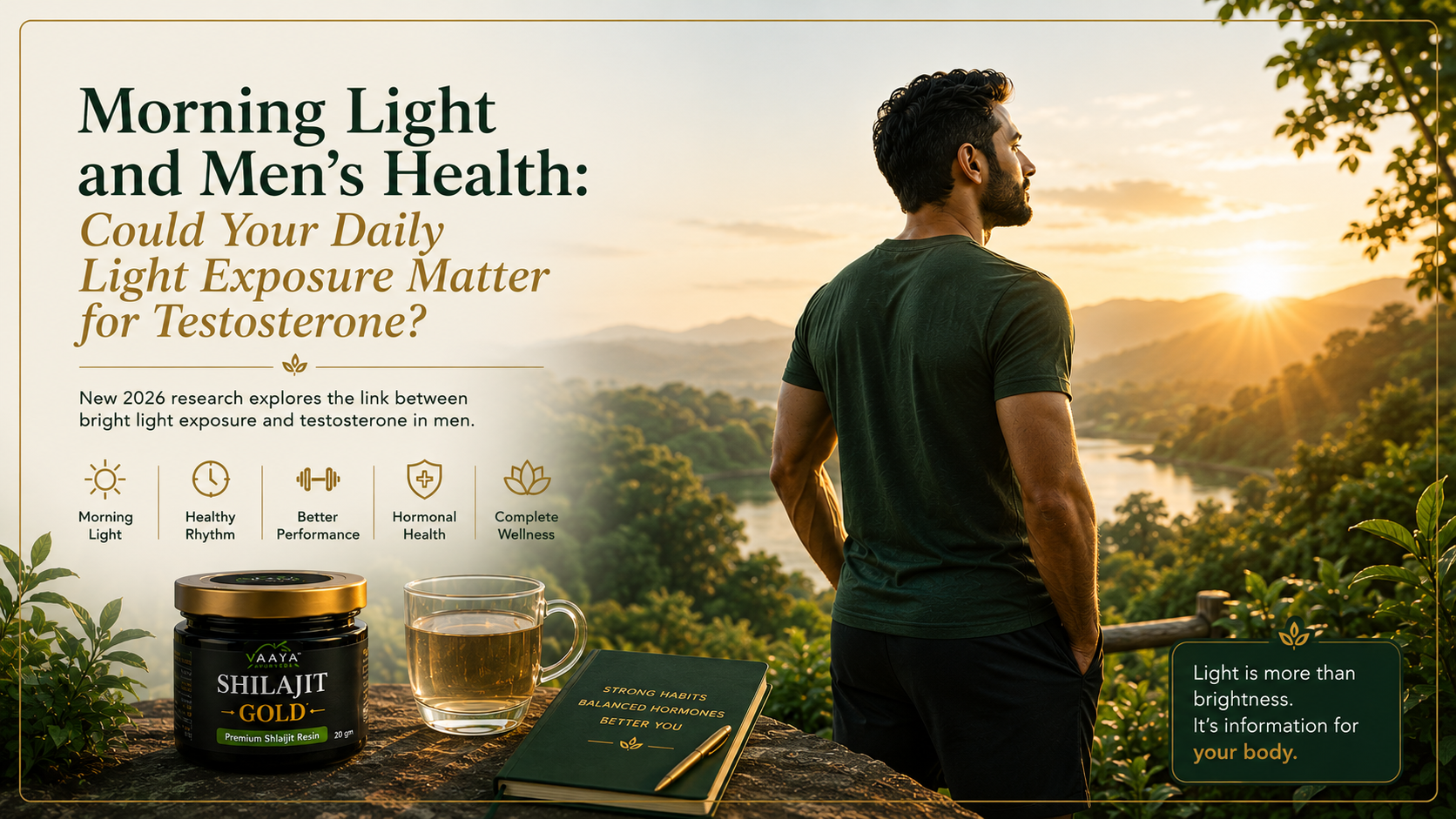
Could getting more bright natural light during the day be relevant to men’s hormonal health?
A new 2026 study suggests there may be a connection.
Researchers analysing data from adult men in the US National Health and Nutrition Examination Survey found that greater exposure to bright light was associated with higher morning serum testosterone levels, even after accounting for several factors including age, body mass index, physical activity, diabetes, vitamin D and dietary habits.
However, there is an important distinction: the study was observational and cross-sectional. It identified an association, not proof that bright light exposure directly increases testosterone.
Still, the finding adds an interesting dimension to the conversation around men's health.
Your hormonal health may be influenced not only by what you eat, how you exercise and how much you sleep—but also by how you interact with your environment.
Key Takeaways
- A 2026 study found an association between bright light exposure and higher morning testosterone in adult men.
- The research does not prove that sunlight or bright light directly raises testosterone.
- Light is an important environmental signal for the body's circadian system.
- Getting regular daylight exposure can be a useful part of a healthy daily routine.
- Light exposure should complement—not replace—sleep, exercise, nutrition and medical care.
- Avoid deliberately staring at the sun; normal outdoor daylight exposure is sufficient.
- Persistent symptoms of low testosterone should be medically evaluated rather than self-treated.
Why Light Is Becoming Part of the Men's Health Conversation
When people talk about testosterone, the conversation usually revolves around familiar topics:
Exercise.
Protein.
Sleep.
Body fat.
Stress.
Supplements.
But there is another factor that is easy to overlook because it is so ordinary:
Light.
Every day, your body receives information from its environment. Temperature, food availability, physical activity and light all provide signals that help regulate biological processes.
Light is particularly important because it helps regulate the body's circadian rhythms—the internal timing system that influences sleep and wakefulness.
And now, researchers are beginning to investigate whether environmental light exposure may also have relevance to male hormonal health.
What Did the New Study Find?
A study published in European Urology Focus in 2026 examined data from adult men participating in the National Health and Nutrition Examination Survey.
Researchers specifically looked at bright light exposure and morning serum testosterone.
Bright light exposure was measured using wrist-worn devices equipped with ambient light sensors. The researchers then examined whether exposure was associated with testosterone levels while accounting for several potential confounding factors.
They reported a positive association between bright light exposure and serum testosterone.
In simple terms:
Men who experienced more bright light exposure tended to have higher morning testosterone levels.
That sounds exciting.
But it is important not to turn an interesting association into a health claim.
Association Does Not Mean Causation
This is perhaps the most important part of understanding the study.
The research does not establish that:
Bright light → higher testosterone
It only establishes that the two were associated within the population studied.
There could be other explanations.
For example, people who spend more time outdoors may also:
- Exercise more.
- Sleep differently.
- Have different work schedules.
- Have different body compositions.
- Spend less time sedentary.
- Have different overall lifestyle patterns.
The researchers adjusted for several factors, but observational research cannot eliminate every possible source of confounding.
So the appropriate conclusion is not:
“Sunlight increases testosterone.”
A more scientifically accurate conclusion is:
“Bright light exposure is associated with testosterone levels, and the relationship deserves further research.”
That distinction matters.
Why Might Light Matter?
Our bodies are designed to respond to light.
Bright light during the day provides a powerful environmental signal that helps regulate the circadian system.
Your circadian rhythm influences sleep timing, alertness and numerous physiological processes.
This creates an interesting connection between yesterday's conversation about men's hormonal health and today's research.
Sleep, light and hormones are not isolated topics.
They exist within the same biological system.
Research published in 2026 has also highlighted the importance of sleep and lifestyle patterns in discussions of male hormonal and reproductive health. A recent review examined how sleep deprivation and high consumption of ultra-processed foods may interact with male hormonal health, while emphasizing that the evidence is still developing.
In other words, men's health may be better understood as a network of interconnected behaviours rather than a collection of isolated “boosters.”
The Morning Light Habit
You don't need a complicated protocol to make daylight part of your routine.
One of the simplest approaches is to spend some time outdoors during the first part of your day.
You might:
- Walk outside after waking.
- Have your morning tea or coffee outdoors.
- Take a short walk before starting work.
- Exercise outdoors when practical.
- Sit near a bright outdoor environment rather than remaining indoors all morning.
The objective isn't to “hack testosterone.”
It is to give your body a strong daytime light signal while incorporating movement and outdoor time into your routine.
That is a much more sensible interpretation of the research.
Don't Look Directly at the Sun
There is an important safety distinction.
Getting outdoor daylight is not the same thing as staring at the sun.
Do not look directly at the sun in an attempt to obtain more light exposure. Direct solar viewing can cause serious eye injury.
Normal outdoor activity is enough.
You don't need extreme exposure, specialised equipment or complicated routines.
Morning Light and Sleep
The relationship between light and sleep is particularly interesting.
Your body uses light as one of its primary environmental cues for determining whether it is daytime or nighttime.
Bright daytime exposure and reduced exposure to stimulating light at night can form part of a healthy sleep routine.
And sleep itself remains one of the foundations of men's health.
That matters because a man chasing testosterone while consistently sleeping poorly may be focusing on the wrong problem.
Before looking for another supplement, consider whether your daily schedule is giving your body enough time to recover.
What About Exercise?
Exercise remains essential.
The new light research does not replace the extensive evidence supporting physical activity.
Resistance training can help maintain muscle mass and strength.
Aerobic activity supports cardiovascular fitness.
Walking helps reduce sedentary time.
Sports can combine physical activity with enjoyment and social connection.
Interestingly, some recent research in men with obesity and obstructive sleep apnea found that a multidisciplinary lifestyle intervention involving weight loss and lifestyle changes was associated with improvements in testosterone and sexual activity outcomes.
The broader lesson is familiar:
Hormonal health is closely connected to overall health.
Don't Forget Body Composition
Testosterone is often discussed as though it exists independently of metabolic health.
It doesn't.
Body composition, physical activity, insulin sensitivity and overall metabolic health can all be relevant to men's hormonal wellbeing.
This is one reason extreme approaches can be counterproductive.
The goal isn't to become as lean as possible.
The goal is to build a body that is metabolically healthy, physically capable and sustainable over time.
What About Diet?
No single food can reliably transform testosterone levels.
Instead, focus on dietary patterns.
A sensible everyday diet can include:
- Vegetables and fruits
- Whole grains
- Pulses and legumes
- Nuts and seeds
- Adequate protein
- Healthy sources of dietary fat
- Minimally processed foods
At the same time, highly processed foods should not dominate the diet.
The recent review of male hormonal health specifically highlighted the growing scientific interest in the relationship between ultra-processed food consumption, sleep and male reproductive and hormonal health.
Again, this is not a reason to fear one particular food.
It is a reason to look at the overall pattern.
Should Men Try to Increase Testosterone?
This is where the conversation needs some restraint.
Testosterone is an important hormone, but higher is not automatically better.
A healthy man's objective should not be to push testosterone as high as possible.
The objective is appropriate hormonal function within the context of overall health.
If you experience persistent symptoms such as:
- Unexplained fatigue
- Reduced sexual desire
- Erectile difficulties
- Loss of muscle mass
- Reduced physical performance
- Persistent low mood
speak with a qualified healthcare professional.
These symptoms can have many possible causes and should not automatically be attributed to testosterone deficiency.
What About Shilajit?
Shilajit has a long history of traditional use in Ayurveda, where it has traditionally been associated with vitality and rejuvenation.
Modern research has investigated Shilajit's chemical composition and potential biological effects, including interest in male wellness. However, evidence for specific hormonal claims remains limited compared with the broader evidence surrounding sleep, exercise, nutrition and healthy lifestyle habits.
This is why a responsible wellness approach should put supplements in their proper place.
A supplement may be part of a routine.
It should not become the routine.
A Simple Daily Routine for Men's Wellness
You don't need an elaborate “biohacking” schedule.
Consider a simple framework:
Morning
Get outdoors and expose yourself to natural daylight.
Move your body.
Eat a nourishing breakfast if you prefer one.
Daytime
Stay physically active.
Eat mostly nutrient-dense foods.
Take breaks from prolonged sitting.
Evening
Reduce unnecessary stimulation.
Create a consistent wind-down routine.
Keep your sleep environment comfortable and dark.
Long Term
Maintain a healthy body composition.
Exercise consistently.
Manage stress.
Get appropriate medical check-ups.
Use supplements thoughtfully.
This approach is far more likely to support long-term wellbeing than constantly searching for the next hormonal shortcut.
Frequently Asked Questions
Does sunlight increase testosterone?
Current evidence does not establish that sunlight directly increases testosterone. A 2026 observational study found an association between bright light exposure and higher morning testosterone levels in adult men, but further research is required to determine whether the relationship is causal.
How much morning sunlight should I get?
There is no established testosterone-specific amount of sunlight that has been proven to increase testosterone. A practical approach is to spend some time outdoors during the day as part of a healthy lifestyle rather than pursuing a specific “testosterone dose” of sunlight.
Can artificial light have the same effect?
The 2026 study examined bright light exposure measured through ambient light sensors; it does not establish that every type of artificial light produces the same hormonal effect. Natural outdoor daylight is a simple way to obtain bright daytime light.
Should I look directly at the sun?
No. Never stare directly at the sun. Normal outdoor daylight exposure is sufficient, and protecting your eyes is more important than attempting to maximise light exposure.
Is morning light more important than exercise?
No. These are not competing strategies. Exercise, sleep, nutrition, healthy body composition and appropriate daylight exposure can all form part of a healthy lifestyle.
Can low testosterone cause tiredness?
Low testosterone can be associated with fatigue and other symptoms, but tiredness has many possible causes. Persistent symptoms should be evaluated by a healthcare professional rather than automatically blamed on testosterone.
Can Shilajit replace a healthy lifestyle?
No. Shilajit should not replace adequate sleep, nutritious food, regular exercise or appropriate medical care.
Final Thoughts
The most interesting thing about the new light-and-testosterone research may not be that it gives men another “testosterone hack.”
It may be that it reminds us how connected our biology is to our environment.
Light affects our daily rhythms.
Our daily rhythms influence sleep.
Sleep interacts with recovery and overall wellbeing.
Exercise affects metabolic and physical health.
Nutrition supplies the building blocks our bodies need.
And all of these factors exist alongside hormonal health.
So tomorrow morning, instead of reaching immediately for another supplement or searching for another testosterone trick, consider something much simpler:
Step outside.
Let the day begin.
Move your body.
Eat well.
Sleep properly.
And build your health from the foundations upward.
Quality & Transparency
This article is intended for educational purposes only and should not be considered medical advice. The 2026 study discussed in this article was observational and does not establish that bright light exposure directly increases testosterone. Individual hormonal levels and health requirements vary. Consult a qualified healthcare professional for diagnosis, testing or personalised medical advice.
About Vaaya
At Vaaya, we believe authentic wellness begins with informed choices.
Our approach draws inspiration from Ayurveda while maintaining a modern emphasis on quality, transparency and responsible wellness. We believe traditional wellness practices can have a place in contemporary life when approached thoughtfully and supported by an understanding of modern health science.
Sources
- Bhambhvani HP et al. “Bright Light Exposure Is Positively Associated with Serum Testosterone in Adult Men: A National Cross-sectional Analysis.” European Urology Focus, 2026.
- Schimenes BC et al. “The 24/7 lifestyle and male hormonal health: how sleep deprivation and ultra-processed foods impact testosterone and reproduction.” Reviews in Endocrine and Metabolic Disorders, 2026.
- Herrera-Quintana L et al. “Impact of an interdisciplinary weight loss and lifestyle intervention on testosterone and scores for sexual activity in men with obesity and obstructive sleep apnea.” Maturitas, 2026.
Begin your Shilajit ritual
Vaaya Shilajit is sourced from high-altitude Himalayan rock, purified the traditional Ayurvedic way, and lab-tested for heavy metals. Whether you start with the pure resin, the gold resin, or the travel-friendly capsules, consistency is what changes how you feel.
Questions? Write to us at care@vaayaayurveda.com
Related reading
 Everyday Wellness28 Sept 202610 min read
Your Body Has a Clock: How Daily Routines Affect Your Health
Your body follows a natural 24-hour rhythm that influences when you feel awake, sleepy, hungry and ready to rest. Discover how everyday habits such as morning light, meal timing, movement and consistent sleep can help support your body's internal clock.
Read article Healthy Ageing5 Sept 202610 min read
Healthy Ageing: 8 Everyday Habits That Help You Age Well
Ageing is inevitable, but how we age is influenced by many factors. Discover eight practical habits that can support physical health, mental wellbeing, mobility and independence as you grow older.
Read article Everyday Wellness4 Sept 202610 min read
How Much Water Do You Really Need? A Practical Guide to Staying Hydrated
Hydration is essential, but there is no single amount of water that everyone must drink every day. Your needs change with your body, activity, climate, diet and health. Here is a practical guide to drinking enough without obsessing over a number.
Read article