
Men’s Health and Hormonal Health: Why Sleep, Exercise and Diet Matter
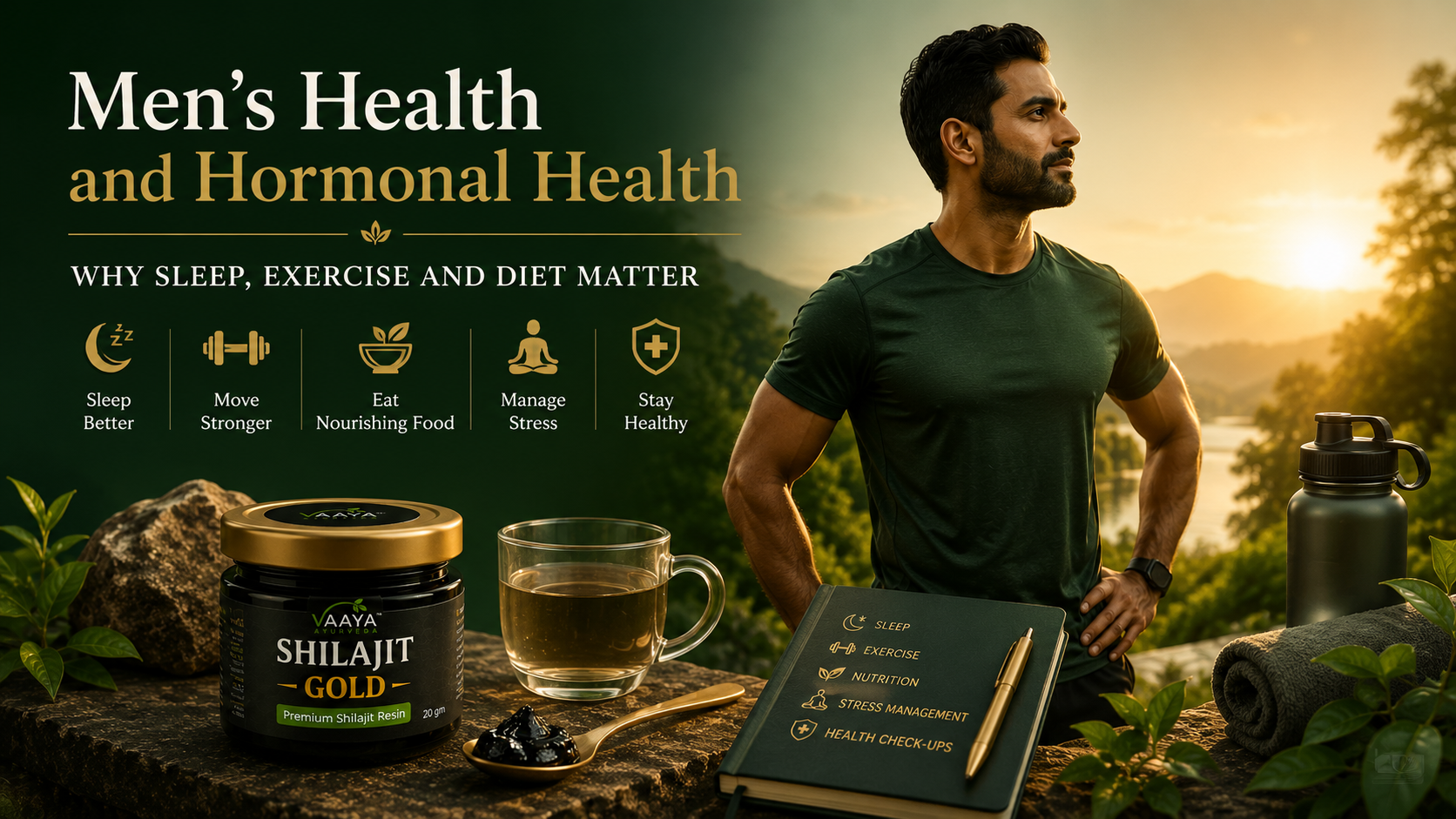
Men’s hormonal health is influenced by much more than age or testosterone alone. Sleep, physical activity, body composition, nutrition, stress and overall metabolic health all contribute to how the body functions.
Recent research continues to examine the relationship between modern lifestyle patterns, sleep, diet and male hormonal health. A 2026 review highlighted growing concerns around insufficient sleep and high consumption of ultra-processed foods, while also noting that more research is needed to establish the precise relationships with testosterone and reproductive health.
The practical message is simple: before looking for a hormonal “boost,” look at the foundations of your lifestyle.
Key Takeaways
- Testosterone is important, but it is only one component of men’s health.
- Sleep and recovery deserve serious attention.
- Regular exercise supports overall metabolic and physical health.
- Maintaining a healthy body composition matters for hormonal wellbeing.
- A diet dominated by ultra-processed foods is not a good foundation for long-term health.
- Persistent symptoms should be investigated rather than automatically attributed to “low testosterone.”
- Testosterone therapy should only be considered when medically indicated.
- Supplements should complement healthy habits, not replace them.
Testosterone Is Not the Whole Story
Few subjects in men's wellness receive as much attention as testosterone.
Search online and you will quickly encounter claims about testosterone boosters, special diets, intense workouts and supplements promising to transform energy, muscle mass, confidence and sexual health.
But hormonal health is considerably more complicated.
Testosterone interacts with numerous systems in the body, and symptoms such as fatigue, reduced motivation, poor sleep or changes in body composition can have many possible causes.
That is why the better question isn't:
“How can I increase my testosterone?”
It is:
“What can I do to create the conditions for better overall health?”
1. Start With Sleep
Sleep is one of the most overlooked components of men's health.
Modern lifestyles often encourage late nights, early mornings, irregular schedules and constant exposure to screens.
Research on sleep and testosterone is not completely consistent. Some studies have found relationships between severe sleep deprivation and testosterone, while others have found more modest or uncertain effects from short-term sleep restriction.
What is much clearer is that poor sleep can affect overall wellbeing, recovery, mood, concentration and physical performance.
Sleep should therefore be treated as part of your health routine rather than as leftover time after everything else is finished.
Aim for a consistent sleep schedule and give yourself enough opportunity to sleep.
2. Exercise for Health, Not Just Hormones
Exercise is frequently marketed as a natural testosterone booster.
The reality is more nuanced.
A systematic review and meta-analysis of exercise training in insufficiently active men found that regular exercise had little overall effect on resting testosterone concentrations in otherwise healthy men with normal testosterone levels.
That does not make exercise unimportant.
Quite the opposite.
Regular physical activity supports cardiovascular fitness, muscular strength, body composition, insulin sensitivity and overall physical function.
Exercise should therefore be viewed as a foundation of men's health rather than as a testosterone hack.
A balanced routine can include:
- Resistance training
- Walking
- Running
- Cycling
- Swimming
- Sports
- Mobility and flexibility work
The best routine is one you can maintain.
3. Pay Attention to Body Composition
Body weight is only one measure of health.
However, excess body fat—particularly when associated with metabolic problems—can be relevant to hormonal health.
Recent clinical guidance on male hypogonadism identifies lifestyle modification and weight management as important first-line approaches for men with overweight or obesity and functional hypogonadism.
This does not mean every man needs to become extremely lean.
It means that maintaining a healthy body composition, staying physically active and supporting metabolic health are worthwhile long-term goals.
4. Look at What You Eat
Your diet does not need to be perfect.
It does need to be sustainable.
Build most meals around foods such as:
- Vegetables
- Fruits
- Whole grains
- Pulses and legumes
- Nuts and seeds
- Quality protein sources
- Healthy fats
At the same time, highly processed foods should not become the foundation of your everyday diet.
A recent review published in 2026 highlighted concerns about the relationship between ultra-processed food consumption, metabolic health and male hormonal and reproductive health, while also emphasizing that the evidence continues to develop.
The takeaway is not that one particular food will “raise testosterone.”
It is that overall dietary quality matters.
5. Don't Confuse Fatigue With Low Testosterone
Feeling tired does not automatically mean you have low testosterone.
Fatigue can be associated with many factors, including:
- Insufficient sleep
- Stress
- Poor nutrition
- Inactivity
- Excessive alcohol consumption
- Certain medications
- Depression or anxiety
- Metabolic conditions
- Other underlying medical problems
If symptoms persist, guessing is rarely the best strategy.
A healthcare professional can evaluate your symptoms and determine whether further investigation is appropriate.
6. Be Careful With Testosterone Therapy
Testosterone replacement therapy is a medical treatment—not a general wellness supplement.
Current clinical guidance emphasizes that testosterone therapy should be based on appropriate medical assessment and clear indications.
It should not simply be used as a shortcut for:
- Losing weight
- Improving athletic performance
- Increasing muscle mass
- Treating normal age-related changes without proper evaluation
Testosterone therapy can also have important considerations, including fertility and other potential adverse effects.
If you suspect low testosterone, speak with a qualified healthcare professional rather than relying on an online “testosterone booster” checklist.
7. Stress and Recovery Matter Too
Modern men's health is often discussed in terms of testosterone, muscle and physical performance.
But recovery is equally important.
Persistent psychological stress can affect sleep, appetite, exercise patterns and overall wellbeing.
A healthier routine might include:
- Regular physical activity
- Time outdoors
- Meaningful social connections
- Periods without work or screens
- Relaxation practices
- Adequate sleep
- Professional support when needed
You don't need to eliminate stress.
You need to develop ways to recover from it.
What About Ayurvedic Wellness?
Ayurveda has traditionally approached vitality as a broader concept rather than focusing exclusively on a single hormone.
Ingredients such as Shilajit have a long history of traditional use in Ayurvedic practice and are commonly associated with vitality and rejuvenation.
Modern research into Shilajit and male health is still developing, and evidence should not be overstated.
For anyone considering Shilajit or another supplement, product quality is particularly important. Purification, authenticity, laboratory testing and transparent sourcing matter.
A supplement should be considered part of a broader wellness routine—not a replacement for sleep, nutrition, exercise or medical care.
A Better Approach to Men's Hormonal Health
Instead of chasing a single number, think in terms of a system.
Sleep
Create a consistent sleep routine and prioritize adequate recovery.
Movement
Combine cardiovascular activity with resistance training.
Nutrition
Build your diet around minimally processed, nutrient-dense foods.
Body Composition
Aim for a healthy and sustainable body composition rather than extreme dieting.
Stress
Develop routines that allow you to recover mentally as well as physically.
Medical Care
Investigate persistent symptoms rather than diagnosing yourself.
Supplements
Use them thoughtfully and choose products with transparent quality standards.
This approach may not be as exciting as a “testosterone hack.”
But it is considerably more useful.
Frequently Asked Questions
Does exercise increase testosterone?
Exercise can cause a temporary increase in testosterone, particularly after moderate or vigorous activity. However, systematic research has not consistently shown that exercise training substantially increases resting testosterone in otherwise healthy men with normal testosterone levels.
Exercise remains extremely valuable for many other aspects of health.
Can lack of sleep lower testosterone?
The relationship is complex. Some studies have associated severe sleep deprivation with lower testosterone, while other research has found weaker or inconsistent effects from moderate sleep restriction.
Regardless of its effect on testosterone specifically, adequate sleep remains important for physical and mental health.
Does being overweight affect testosterone?
Excess body weight and metabolic health can be associated with lower testosterone in some men. Clinical guidance supports lifestyle modification and weight management as important approaches in men with obesity-associated functional hypogonadism.
Should every man get his testosterone tested?
Not necessarily. Testosterone testing is generally most appropriate when a healthcare professional identifies relevant symptoms or risk factors. A single test result should also not be interpreted without considering the clinical context.
Are testosterone boosters safe?
“Testosterone booster” is a broad marketing category rather than a standardized medical treatment. Ingredients, quality and evidence vary considerably between products.
Be particularly cautious with products making dramatic hormonal or performance claims.
Can Shilajit support men's wellness?
Shilajit has a long history of traditional Ayurvedic use. Modern research is investigating its potential effects, but evidence remains limited for many specific claims. It should not be treated as a substitute for medical treatment or foundational healthy habits.
What is more important: testosterone or lifestyle?
It is not an either-or question. Hormonal health exists within the broader context of sleep, nutrition, physical activity, body composition, stress and general health.
Final Thoughts
Men's health should not be reduced to testosterone.
Hormones matter, but so do the everyday conditions in which your body operates.
Sleep regularly.
Move your body.
Eat well.
Maintain a healthy body composition.
Manage stress.
Avoid harmful habits.
And when something doesn't feel right for an extended period, investigate it instead of assuming you simply need a supplement.
The strongest approach to men's wellness is rarely a shortcut.
It is a foundation.
Quality & Transparency
This article is intended for educational purposes only and should not be considered medical advice. Testosterone levels, symptoms and health requirements vary between individuals. Consult a qualified healthcare professional for diagnosis, testing, treatment or personalised medical advice.
About Vaaya
At Vaaya, we believe authentic wellness begins with informed choices.
Our approach draws inspiration from Ayurveda while maintaining a modern emphasis on quality, transparency and responsible wellness. We believe traditional wellness practices can have a place in a contemporary lifestyle—but they should be approached thoughtfully and never used as a substitute for appropriate medical care.
Sources
Brazilian Society of Endocrinology and Metabolism, Brazilian Society of Urology & Brazilian Association for Sexual Medicine and Health — Care of Patients with Male Hypogonadism, 2026 https://pmc.ncbi.nlm.nih.gov/articles/PMC13124176/
PubMed — The 24/7 lifestyle and male hormonal health: how sleep deprivation and ultra-processed foods impact testosterone and reproduction, 2026 https://pubmed.ncbi.nlm.nih.gov/41862783/
PubMed — Effects of Exercise Training on Resting Testosterone Concentrations in Insufficiently Active Men: A Systematic Review and Meta-Analysis https://pubmed.ncbi.nlm.nih.gov/35134000/
PubMed — Effect of partial and total sleep deprivation on serum testosterone in healthy males: A systematic review and meta-analysis https://pubmed.ncbi.nlm.nih.gov/34801825/
National Center for Biotechnology Information — The effect of sleep on men’s health https://pmc.ncbi.nlm.nih.gov/articles/PMC7108988/
Begin your Shilajit ritual
Vaaya Shilajit is sourced from high-altitude Himalayan rock, purified the traditional Ayurvedic way, and lab-tested for heavy metals. Whether you start with the pure resin, the gold resin, or the travel-friendly capsules, consistency is what changes how you feel.
Questions? Write to us at care@vaayaayurveda.com
Related reading
 Everyday Wellness28 Sept 202610 min read
Your Body Has a Clock: How Daily Routines Affect Your Health
Your body follows a natural 24-hour rhythm that influences when you feel awake, sleepy, hungry and ready to rest. Discover how everyday habits such as morning light, meal timing, movement and consistent sleep can help support your body's internal clock.
Read article Digestive Wellness7 Sept 202611 min read
Dietary Fibre: Why Your Gut Needs More Than Just Roughage
Dietary fibre is more than something that keeps digestion moving. From whole grains and pulses to fruits, vegetables, nuts and seeds, fibre-rich foods can support digestive health and form an important part of a balanced diet.
Read article Healthy Ageing5 Sept 202610 min read
Healthy Ageing: 8 Everyday Habits That Help You Age Well
Ageing is inevitable, but how we age is influenced by many factors. Discover eight practical habits that can support physical health, mental wellbeing, mobility and independence as you grow older.
Read article