
How to Improve Digestion Naturally: An Ayurvedic Guide to Better Gut Health
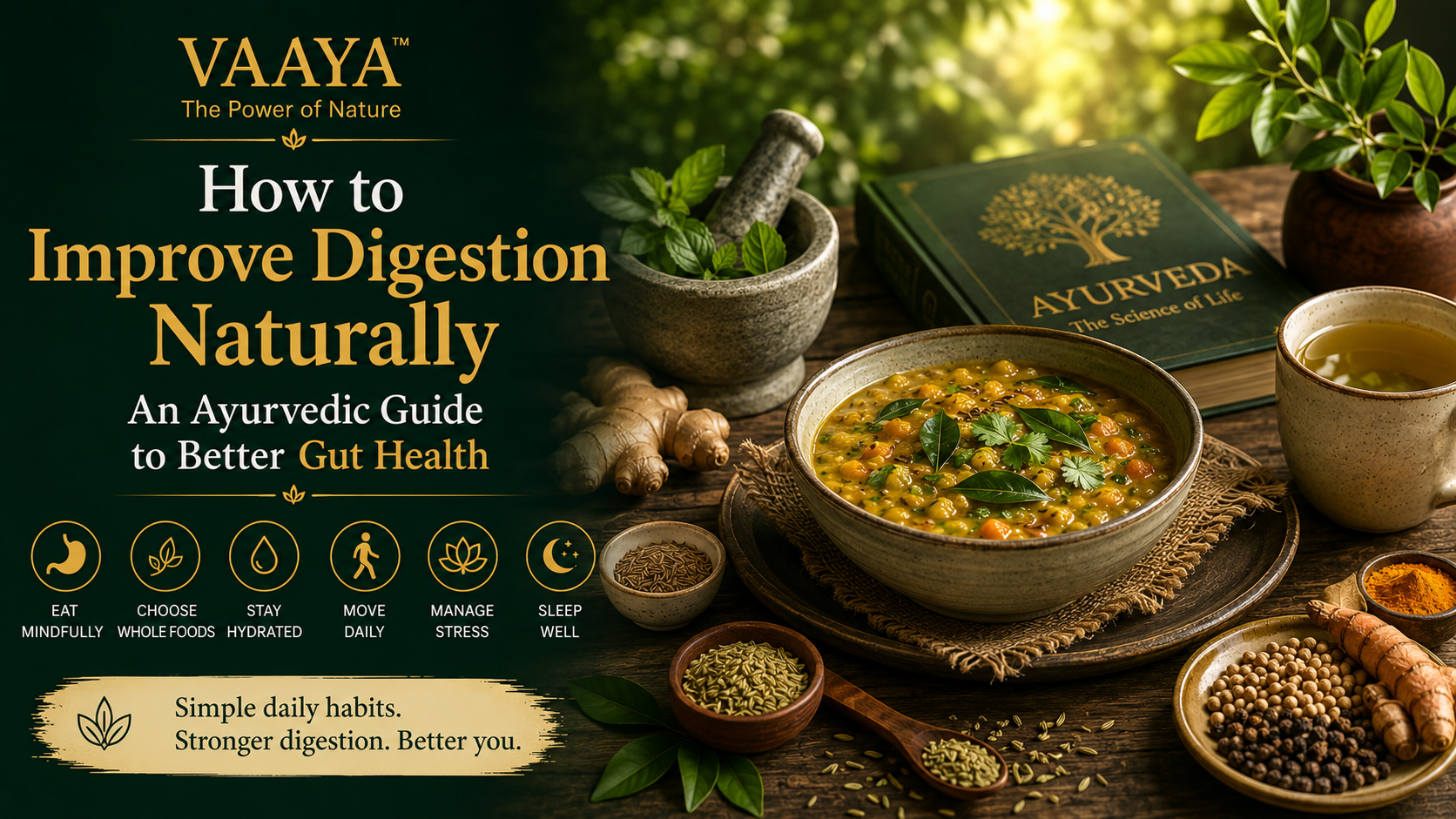
Healthy digestion is supported by more than a single food, supplement or remedy. Regular meals, adequate hydration, sufficient fibre, physical activity, mindful eating, good sleep and managing stress can all contribute to digestive wellbeing.
Ayurveda has traditionally placed considerable importance on digestion, often describing digestive capacity through the concept of Agni. While traditional Ayurvedic concepts and modern gastrointestinal science are different frameworks, both encourage paying attention to eating habits, routine and the way food affects the individual.
The most useful approach is simple: eat a balanced diet, establish consistent habits and pay attention to your body's signals.
Key Takeaways
- Eat slowly and give your meals your full attention.
- Choose a varied diet containing fibre-rich whole foods.
- Stay adequately hydrated throughout the day.
- Include regular physical activity.
- Avoid making very large meals a daily habit.
- Build a reasonably consistent eating routine.
- Limit excessive ultra-processed foods and added sugars.
- Sleep well and manage chronic stress.
- Do not rely on detoxes or extreme dietary restrictions.
- Persistent digestive symptoms deserve professional medical evaluation.
Why Digestion Matters
Digestion is one of those aspects of health that is easy to ignore when everything is working normally.
But when digestion becomes uncomfortable, it can affect everyday life.
Bloating, constipation, irregular bowel movements, acidity, heaviness after meals or abdominal discomfort can make even ordinary days feel difficult.
Good digestive health does not come from one magical ingredient.
It is usually built through repeated everyday behaviours.
What you eat matters.
How much you eat matters.
How quickly you eat matters.
And so do sleep, movement, hydration and stress.
Ayurveda and the Concept of Agni
In Ayurveda, digestion is traditionally described through the concept of Agni, often translated as digestive fire.
Agni is an important concept within Ayurvedic philosophy and is used to describe the body's capacity to digest and transform food.
Traditional Ayurvedic practice therefore pays considerable attention to:
- Meal timing
- Food quality
- Appetite
- Digestion
- Individual constitution
- Seasonal changes
- Daily routine
It is important, however, not to treat traditional concepts as direct equivalents of modern physiological mechanisms.
Modern medicine describes digestion through processes involving the gastrointestinal tract, enzymes, hormones, the nervous system and the gut microbiome.
The two perspectives come from different traditions, but both can encourage a more thoughtful approach to eating.
1. Eat Mindfully
One of the simplest ways to improve your relationship with food is to slow down.
Eating while working, driving, scrolling or watching television can make it easy to lose awareness of how much you are eating and how quickly you are eating.
Instead, try to:
- Sit down for your meals.
- Chew thoroughly.
- Eat without rushing.
- Notice your hunger and fullness.
- Reduce distractions.
- Give yourself enough time to finish comfortably.
Mindful eating does not mean turning every meal into a meditation session.
It simply means paying attention.
2. Include Enough Fibre
Fibre plays an important role in digestive health.
It is found naturally in foods such as:
- Vegetables
- Fruits
- Whole grains
- Beans
- Lentils
- Nuts
- Seeds
Fibre can support regular bowel movements and is also an important source of nourishment for beneficial microorganisms in the gut.
However, increasing fibre very rapidly can cause temporary bloating or discomfort.
If your current diet is low in fibre, increase it gradually and maintain adequate fluid intake.
3. Stay Hydrated
Water is essential for normal bodily functions, including digestion.
Rather than drinking huge quantities at once, aim for regular hydration throughout the day.
Your requirements can vary depending on factors such as:
- Climate
- Physical activity
- Body size
- Diet
- Sweating
- Health conditions
In hot climates, hydration becomes particularly important.
Plain water is generally sufficient for everyday hydration.
4. Move After Eating
Movement is another simple way to support an active lifestyle.
You do not necessarily need a strenuous workout after every meal.
A gentle walk can be an easy option, particularly after a large meal or during a sedentary workday.
More broadly, regular physical activity is associated with better overall health and can support normal bowel function.
Even small amounts of movement accumulated throughout the day can be useful.
5. Don't Make Every Meal Heavy
Large, rich meals can leave some people feeling uncomfortable or excessively full.
Instead of routinely eating until you feel stuffed, try paying attention to your body's signals.
A balanced meal can include a combination of:
- Vegetables
- Protein
- Whole grains or other carbohydrate sources
- Healthy fats
- Legumes
- Fermented or dairy foods where appropriate
The ideal combination depends on your dietary preferences, nutritional needs and tolerance.
There is no single perfect plate for everyone.
6. Build a Consistent Eating Routine
Your lifestyle does not have to revolve around rigid meal timings.
However, constantly skipping meals and then compensating with very large meals can make eating patterns difficult to manage.
A reasonably predictable routine can make healthy eating easier.
Try to establish meal patterns that work with your:
- Work schedule
- Sleep schedule
- Exercise routine
- Appetite
- Family routine
Consistency should make life easier rather than create another source of stress.
7. Choose Whole Foods More Often
You do not need to eliminate every packaged food from your diet.
But making whole or minimally processed foods the foundation of your diet can make it easier to obtain fibre, vitamins, minerals and other nutrients.
Consider regularly including:
- Seasonal fruits
- Vegetables
- Dal and legumes
- Whole grains
- Nuts and seeds
- Eggs
- Fish or other protein sources
- Fermented foods where suitable
Traditional Indian diets already contain many naturally fibre-rich and nutrient-dense foods.
Sometimes improving digestion begins with returning to simple food rather than searching for complicated solutions.
8. Don't Underestimate Sleep
Digestion does not exist separately from the rest of the body.
Sleep affects many aspects of health, and poor sleep can also influence appetite, food choices and daily energy levels.
Rather than searching for a special digestive remedy, look at your entire lifestyle.
Ask yourself:
Are you sleeping enough?
Are you moving regularly?
Are you eating enough fibre?
Are you drinking enough water?
Are you constantly stressed?
Sometimes the answer to better digestion is found outside the kitchen.
9. Manage Stress
The digestive system and nervous system are closely connected.
Stress can influence gastrointestinal symptoms in some people, particularly those who are already prone to digestive discomfort.
That does not mean every digestive problem is caused by stress.
But if your lifestyle involves constant pressure, very little sleep and no time to slow down, it is worth addressing the bigger picture.
Simple practices can include:
- Walking
- Breathing exercises
- Meditation
- Spending time outdoors
- Maintaining social connections
- Taking regular breaks from screens
- Establishing a consistent sleep routine
You do not need to eliminate stress completely.
The goal is to build better ways of responding to it.
What About Ginger, Cumin and Other Traditional Ingredients?
Ginger, cumin, fennel and other culinary spices have long been used in Indian and Ayurvedic food traditions.
They can add flavour and variety to meals and may be enjoyable as part of a balanced diet.
However, a traditional ingredient should not automatically be treated as a medical treatment.
You do not need to consume large amounts of spices, concentrated preparations or "detox" drinks to have healthy digestion.
Food first.
Routine second.
Supplements and specialised preparations, if needed, should be considered carefully.
Do You Need a Digestive Detox?
Probably not.
The idea that the digestive system needs regular "detoxing" through juice cleanses, fasting programmes or special drinks is often promoted in wellness marketing.
Your body already has organs and biological systems responsible for processing and eliminating waste.
Extreme cleanses can also make it harder to obtain adequate nutrition.
Instead of periodically trying to "reset" your digestion, build habits that support it every day.
Common Digestion Mistakes
Eating Too Quickly
Fast eating can make it easier to consume more food before your body registers fullness.
Suddenly Increasing Fibre
Adding a large amount of fibre overnight can increase bloating for some people.
Increase it gradually.
Ignoring Hydration
A diet rich in fibre works best alongside adequate fluid intake.
Relying on One Food
No single fruit, spice, herb or supplement can replace a balanced diet.
Following Extreme Detox Diets
Short-term restriction is not a sustainable approach to digestive health.
Ignoring Persistent Symptoms
Repeated or worsening digestive symptoms should not simply be labelled as "poor digestion" or "Ama."
A healthcare professional can help determine the underlying cause.
A Simple Daily Digestion Routine
You can keep your approach remarkably simple.
Morning
Start the day with water and give yourself enough time for your morning routine.
Breakfast
Eat a nourishing meal if you are hungry and choose foods that suit your dietary needs.
Throughout the Day
Drink water regularly and include fruits, vegetables and fibre-rich foods.
After Meals
Avoid immediately returning to prolonged sitting when possible. A gentle walk can be a simple habit.
Evening
Eat dinner at a comfortable time and avoid routinely eating extremely heavy meals immediately before bed.
Before Sleep
Give yourself time to wind down rather than ending the day with constant screen stimulation.
Frequently Asked Questions
What is the best food for digestion?
There is no single best food for everyone. A varied diet containing adequate fibre, fluids and nutrient-dense foods is generally more useful than relying on one "digestive" food.
Is warm water good for digestion?
Warm water is commonly used in Ayurvedic routines and may be a pleasant way to hydrate. There is no need to make it extremely hot, and ordinary water is also perfectly suitable for hydration.
Does walking after meals help digestion?
A gentle walk can be a useful way to introduce movement after eating. It should be comfortable rather than strenuous.
Can stress affect digestion?
Stress can influence gastrointestinal symptoms in some people because the digestive system and nervous system interact closely. Persistent symptoms should still be medically evaluated.
Should I take digestive supplements?
Not necessarily. Supplements are not a substitute for a balanced diet and healthy lifestyle. If you have persistent digestive problems, identify the underlying issue with appropriate professional guidance rather than self-treating indefinitely.
Are Ayurvedic herbs safe for everyone?
No. "Natural" does not automatically mean safe for every person. Herbs can interact with medicines or be inappropriate for certain health conditions. Use them responsibly and seek professional advice when necessary.
How can I improve digestion naturally?
Start with the basics: eat a varied diet, increase fibre gradually, stay hydrated, move regularly, eat mindfully, sleep adequately and manage stress.
Final Thoughts
Better digestion rarely comes from one dramatic intervention.
It is usually the result of small decisions repeated consistently.
Eat real food.
Drink enough water.
Move your body.
Slow down when you eat.
Sleep well.
Pay attention to how your body responds.
And when something does not feel right for a prolonged period, do not simply assume you need another wellness remedy. Find out why.
Ayurveda's emphasis on routine and mindful living can offer useful inspiration, while modern nutrition and healthcare provide important evidence-based context.
The goal is not perfect digestion.
The goal is a healthier, more balanced relationship with food and your body.
Quality & Transparency
This article is intended for educational and general wellness purposes only. Ayurvedic concepts are presented as traditional approaches and should not be considered a substitute for medical diagnosis or treatment.
Persistent abdominal pain, unexplained weight loss, blood in the stool, persistent vomiting, difficulty swallowing, significant changes in bowel habits or other concerning symptoms should be evaluated by a qualified healthcare professional.
About Vaaya
At Vaaya, we believe authentic wellness begins with trust.
Our approach is inspired by Ayurvedic tradition while recognising the importance of informed, responsible and modern wellness choices.
We believe nature can be part of a thoughtful daily routine—but lasting wellbeing begins with balance, consistency and understanding.
VAAYA™ — The Power of Nature
Sources
- Ministry of AYUSH — https://www.ayush.gov.in/
- National Center for Complementary and Integrative Health (NCCIH) — https://www.nccih.nih.gov/
- National Institute of Diabetes and Digestive and Kidney Diseases (NIDDK) — https://www.niddk.nih.gov/
- National Center for Biotechnology Information (NCBI) — https://www.ncbi.nlm.nih.gov/
- PubMed — https://pubmed.ncbi.nlm.nih.gov/
Begin your Shilajit ritual
Vaaya Shilajit is sourced from high-altitude Himalayan rock, purified the traditional Ayurvedic way, and lab-tested for heavy metals. Whether you start with the pure resin, the gold resin, or the travel-friendly capsules, consistency is what changes how you feel.
Questions? Write to us at care@vaayaayurveda.com
Related reading
 Everyday Wellness28 Sept 202610 min read
Your Body Has a Clock: How Daily Routines Affect Your Health
Your body follows a natural 24-hour rhythm that influences when you feel awake, sleepy, hungry and ready to rest. Discover how everyday habits such as morning light, meal timing, movement and consistent sleep can help support your body's internal clock.
Read article Digestive Wellness7 Sept 202611 min read
Dietary Fibre: Why Your Gut Needs More Than Just Roughage
Dietary fibre is more than something that keeps digestion moving. From whole grains and pulses to fruits, vegetables, nuts and seeds, fibre-rich foods can support digestive health and form an important part of a balanced diet.
Read article Healthy Ageing5 Sept 202610 min read
Healthy Ageing: 8 Everyday Habits That Help You Age Well
Ageing is inevitable, but how we age is influenced by many factors. Discover eight practical habits that can support physical health, mental wellbeing, mobility and independence as you grow older.
Read article