
How Much Sugar Is Too Much? Understanding Sugar in Your Everyday Diet
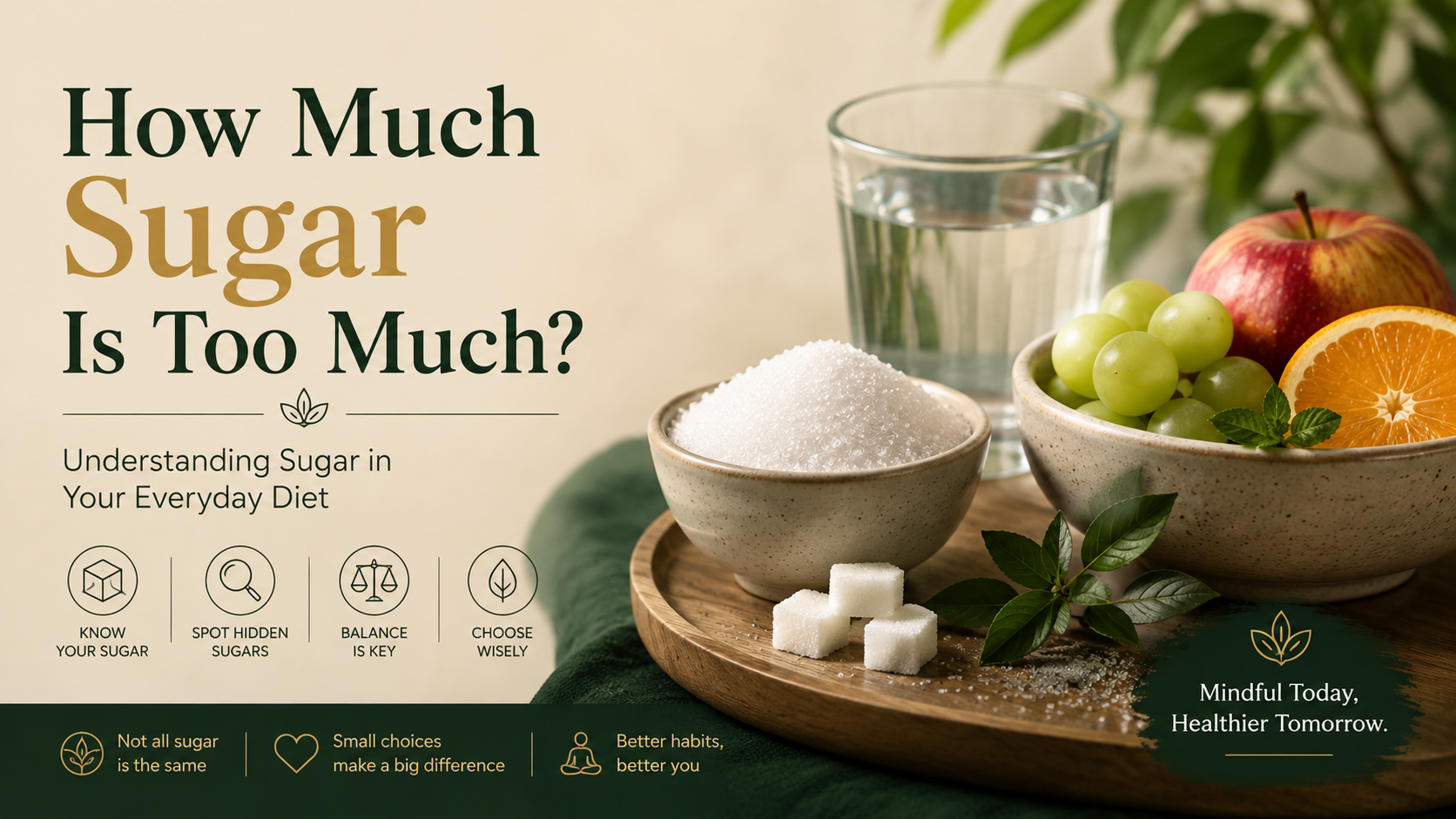
Sugar itself is not something you need to completely eliminate from your diet. The bigger concern is excessive intake of added and free sugars, particularly from sweets, sugary drinks, desserts, packaged foods and processed beverages.
For most adults, keeping added or free sugar intake modest is a sensible approach. The World Health Organization recommends limiting free sugars to less than 10% of total daily energy intake, with additional benefits possible when intake is below 5%.
The important distinction is between sugar that naturally occurs in whole foods and sugar that is added during processing or preparation.
Key Takeaways
- Not all sugar in food is the same.
- Whole fruits contain naturally occurring sugars along with fibre, water and micronutrients.
- Added sugars are found in sweets, desserts, sugary drinks and many packaged foods.
- Soft drinks and sweetened beverages can contribute large amounts of sugar without making you feel particularly full.
- "Natural" sweeteners such as honey and jaggery are still sources of sugar.
- Reading ingredient lists can help identify hidden sources of added sugar.
- Reducing sugar does not mean eliminating fruit or all carbohydrates.
- Small, sustainable changes are generally more useful than extreme restriction.
Why Are We Talking About Sugar?
Sugar has become one of the most misunderstood components of the modern diet.
For some people, the answer seems simple: sugar is bad and should be avoided.
For others, sugar is treated as harmless because it occurs naturally in foods.
The reality lies somewhere in between.
Your body uses glucose as an important source of energy. Carbohydrate-containing foods can be broken down into glucose, which is then used by cells throughout the body.
The concern is not that the body needs glucose.
The concern is how much added sugar we consume, how frequently we consume it, and where it comes from.
Natural Sugar vs Added Sugar
One of the easiest ways to understand sugar is to distinguish between naturally occurring sugar and added sugar.
Naturally Occurring Sugar
Sugar naturally occurs in foods such as:
- Whole fruits
- Some vegetables
- Milk and dairy products
A whole apple, for example, contains naturally occurring sugars, but it also provides fibre, water and various micronutrients.
Eating an apple is therefore very different from drinking a beverage containing a similar amount of sugar.
Added Sugar
Added sugar is incorporated into food or drinks during manufacturing, preparation or cooking.
Common sources include:
- Table sugar
- Sweetened beverages
- Cakes and pastries
- Biscuits and cookies
- Chocolates
- Candies
- Sweetened breakfast cereals
- Flavoured dairy products
- Sweet sauces
- Desserts
This is where excessive sugar intake can become easy to overlook.
How Much Sugar Is Too Much?
There is no single number that applies identically to every individual.
However, public-health guidelines provide useful boundaries.
The World Health Organization recommends that free sugars provide less than 10% of total daily energy intake. It suggests that reducing this further to below 5% may provide additional health benefits.
For someone consuming approximately 2,000 calories per day:
- 10% of calories from sugar = approximately 50 g
- 5% of calories from sugar = approximately 25 g
These figures are useful reference points rather than personal prescriptions.
Your actual needs depend on factors such as age, body size, activity level and overall diet.
What Counts as Free Sugar?
The term "free sugars" includes sugars added to foods and drinks, as well as sugars naturally present in honey, syrups, fruit juices and fruit juice concentrates.
This is important because a food being marketed as "natural" does not automatically mean it is low in sugar.
For example, honey and jaggery may have a different culinary and traditional role from refined white sugar, but they still contribute significant amounts of sugar to the diet.
The quantity matters.
The Problem With Sugary Drinks
One of the easiest ways to consume a large amount of sugar is through beverages.
Soft drinks, sweetened juices, energy drinks, flavoured coffees and other sweetened beverages can deliver substantial amounts of sugar without providing the same level of fullness as solid food.
This makes liquid sugar particularly easy to consume in excess.
A simple first step for many people is therefore to examine what they drink before worrying about every gram of sugar in their food.
What About Fruit?
Whole fruit does not need to be treated like candy simply because it contains sugar.
Whole fruits come packaged with fibre, water, vitamins, minerals and other plant compounds.
For most healthy people, eating whole fruit as part of a balanced diet is entirely reasonable.
The situation is different with fruit juice.
Juicing can remove much of the physical structure and fibre of the original fruit, making it easier to consume a large amount quickly.
So instead of asking:
"Does fruit contain sugar?"
A more useful question is:
"What form is the sugar coming in, and what else does the food provide?"
What About Jaggery and Honey?
This is a common question, particularly in India.
Jaggery and honey are often perceived as healthier alternatives to refined sugar because they are less processed or have traditional uses.
They may contain small amounts of minerals or other compounds, depending on the product, but they are still concentrated sources of sugar.
Replacing white sugar with jaggery does not make a high-sugar diet automatically healthy.
The better approach is to focus on overall quantity and frequency.
Hidden Sugar in Everyday Foods
Sugar is not always obvious.
It may appear in:
- Breakfast cereals
- Granola
- Flavoured yoghurt
- Protein bars
- Packaged sauces
- Ketchup
- Instant beverages
- Bakery products
- Ready-to-eat foods
- Sweetened health drinks
Reading the nutrition label and ingredient list can therefore be more useful than relying solely on front-of-pack claims such as "natural", "healthy" or "made with real ingredients."
How to Reduce Sugar Without Giving Up Everything You Enjoy
You do not need to completely eliminate sweets to reduce excessive sugar consumption.
Start with simple changes.
1. Reduce Sugary Drinks
Switching from a sweetened beverage to water, unsweetened tea or another low-sugar option can make a meaningful difference.
2. Reduce Gradually
If you take two teaspoons of sugar in your tea, reducing it to one and a half may be easier to sustain than eliminating it overnight.
3. Read Labels
Look at both the serving size and the sugar content.
A product may appear low in sugar until you realise that the listed serving represents only a small portion of what you actually consume.
4. Keep Whole Fruit Available
When you want something sweet, whole fruit can be a simple option.
5. Be Mindful of "Healthy" Snacks
Protein bars, cereals, smoothies and packaged wellness products can sometimes contain more added sugar than expected.
Does Eating Sugar Cause Diabetes?
This is another area where oversimplification can be misleading.
Type 2 diabetes is a complex metabolic condition involving factors such as genetics, body composition, physical activity, diet and insulin resistance.
It would be inaccurate to say that eating one sugary food directly "causes diabetes."
However, a long-term dietary pattern high in added sugars—particularly when it contributes to excess calorie intake, weight gain and poor overall diet quality—can contribute to metabolic risk.
The goal should therefore be to improve the overall dietary pattern, rather than becoming frightened of an occasional dessert.
Sugar and Energy Levels
Many people notice that very sweet foods can produce a temporary feeling of energy followed by hunger or an energy dip.
Individual responses vary, but meals built around a combination of protein, fibre, healthy fats and minimally processed carbohydrates generally provide a more balanced nutritional pattern than relying heavily on refined, sugary foods.
If you regularly experience energy fluctuations, look at the entire meal rather than blaming sugar alone.
Sleep, hydration, physical activity and total calorie intake also matter.
Sugar and Dental Health
One area where the relationship is particularly clear is dental health.
Frequent consumption of free sugars increases the risk of dental caries because oral bacteria can metabolise sugars and produce acids that damage tooth enamel.
This means that frequency matters, not just the total amount consumed.
Constantly sipping sweetened beverages throughout the day can therefore be particularly unfavourable for dental health.
Frequently Asked Questions
Is sugar completely unhealthy?
No. Sugar is a carbohydrate and glucose is an important energy substrate for the body. The concern is primarily excessive consumption of added and free sugars.
Should I stop eating fruit because it contains sugar?
Generally, no. Whole fruits provide fibre, water and micronutrients in addition to naturally occurring sugars.
Is jaggery healthier than sugar?
Jaggery is less refined and may retain small amounts of minerals, but it is still primarily a source of sugar. It should not be considered a free pass to consume large quantities.
Is honey better than sugar?
Honey has a different composition and flavour and may contain small amounts of other compounds, but it still contributes free sugars. Quantity remains important.
How much sugar should I eat per day?
There is no universal personal limit. As a general public-health reference, WHO recommends keeping free sugars below 10% of daily energy intake, with further benefits potentially seen below 5%.
Should I avoid sugar completely if I am trying to be healthy?
Complete avoidance is not necessary for most people. A more sustainable approach is to reduce excessive added sugar while maintaining a balanced diet.
Is fruit juice healthy?
Fruit juice can contain substantial amounts of free sugar and generally provides less fibre than whole fruit. Whole fruit is usually the better everyday choice.
What is the easiest way to reduce sugar?
Start with beverages. Reducing sugary drinks, sweetened tea and coffee, and other liquid sources of sugar can be one of the simplest changes.
Final Thoughts
Sugar does not need to be treated as the enemy.
The more useful approach is to understand where your sugar is coming from, how much you consume, and how frequently you consume it.
A piece of fruit is not the same as a soft drink. Honey is still a source of sugar. Jaggery is still a source of sugar. And an occasional dessert does not undo an otherwise balanced diet.
Instead of chasing a completely sugar-free lifestyle, focus on reducing unnecessary added sugar, choosing whole foods more often, and building eating habits that you can maintain for years.
Better health is usually built through consistent choices—not perfect ones.
Quality & Transparency
This article is intended for educational purposes only and should not be considered medical or nutritional advice. Individual dietary requirements vary. If you have diabetes, metabolic disease, or another medical condition requiring dietary management, consult a qualified healthcare professional or registered dietitian for personalised guidance.
About Vaaya
At Vaaya, we believe that authentic wellness begins with understanding.
Our approach combines the wisdom of Ayurveda with responsible modern wellness practices, helping you make informed choices about your everyday health.
The Power of Nature.
Sources
- World Health Organization (WHO) — Guideline: Sugars intake for adults and children
- World Health Organization (WHO) — Healthy diet
- Food Safety and Standards Authority of India (FSSAI) — Nutrition and food labelling resources
- National Center for Biotechnology Information (NCBI)
- PubMed — Research literature on dietary sugar, metabolic health and nutrition
Begin your Shilajit ritual
Vaaya Shilajit is sourced from high-altitude Himalayan rock, purified the traditional Ayurvedic way, and lab-tested for heavy metals. Whether you start with the pure resin, the gold resin, or the travel-friendly capsules, consistency is what changes how you feel.
Questions? Write to us at care@vaayaayurveda.com
Related reading
 Everyday Wellness28 Sept 202610 min read
Your Body Has a Clock: How Daily Routines Affect Your Health
Your body follows a natural 24-hour rhythm that influences when you feel awake, sleepy, hungry and ready to rest. Discover how everyday habits such as morning light, meal timing, movement and consistent sleep can help support your body's internal clock.
Read article Digestive Wellness7 Sept 202611 min read
Dietary Fibre: Why Your Gut Needs More Than Just Roughage
Dietary fibre is more than something that keeps digestion moving. From whole grains and pulses to fruits, vegetables, nuts and seeds, fibre-rich foods can support digestive health and form an important part of a balanced diet.
Read article Healthy Ageing5 Sept 202610 min read
Healthy Ageing: 8 Everyday Habits That Help You Age Well
Ageing is inevitable, but how we age is influenced by many factors. Discover eight practical habits that can support physical health, mental wellbeing, mobility and independence as you grow older.
Read article