Beard Dye for Men: How to Colour Your Beard Safely and Naturally
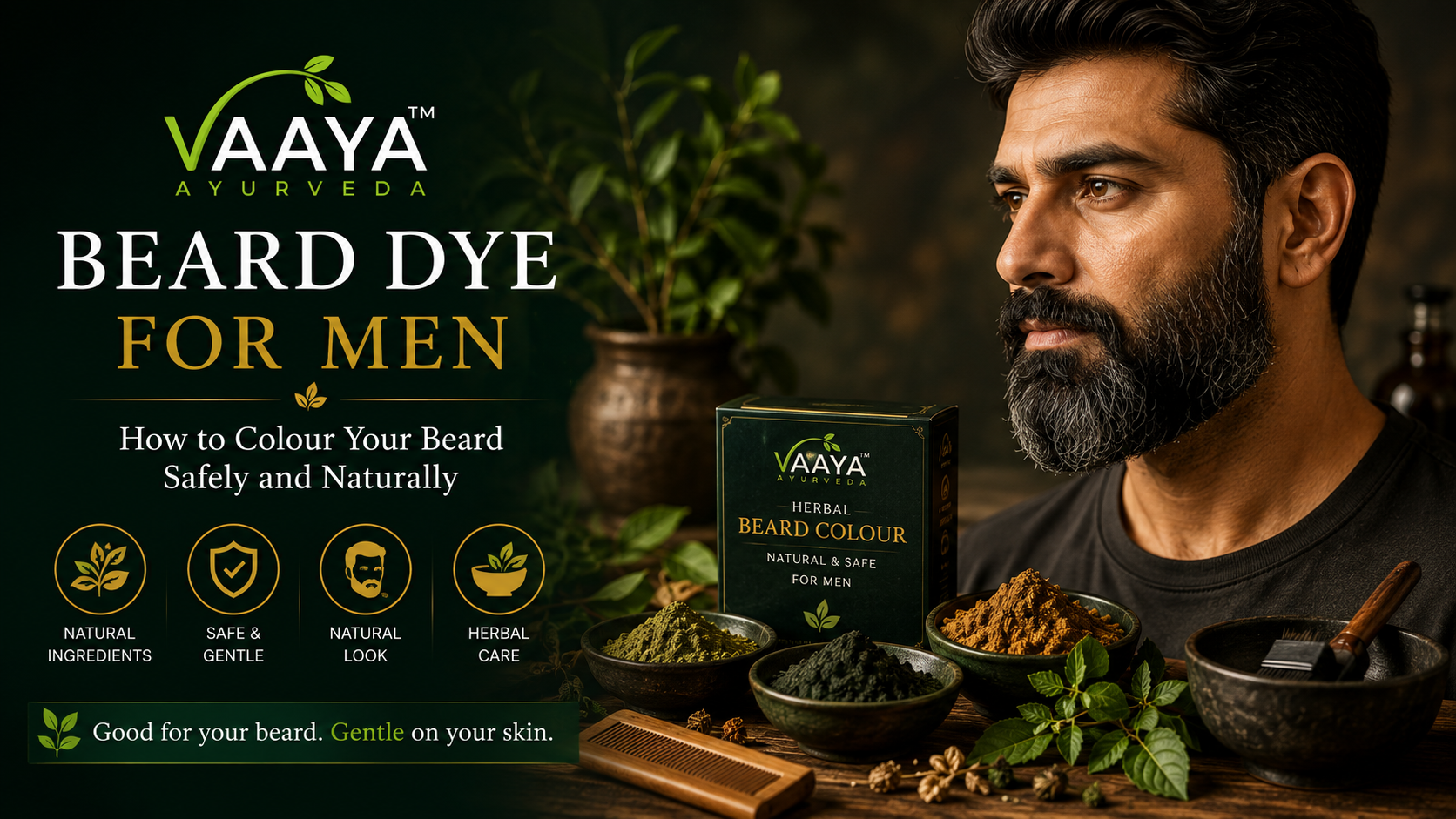
If you want to reduce the appearance of grey in your beard, beard dye can provide a darker and more uniform appearance. However, beard colouring requires more care than simply using the same dye you might use on scalp hair.
The skin underneath the beard is facial skin, and it can be sensitive to colouring ingredients.
Plant-based colouring ingredients such as henna and indigo are traditional options for creating brown, reddish-brown and darker shades. Conventional beard dyes may use oxidative colouring systems that can produce more predictable and faster results.
Whichever approach you choose, the most important considerations are the intended use of the product, the complete ingredient list and proper patch testing.
"Natural" does not automatically mean irritation-free, and a product marketed as a beard colour should not be assumed to be suitable simply because it is labelled herbal.
Key Takeaways
- Beard dye can help reduce the appearance of grey and create a more uniform look.
- Beard hair can respond differently to colour than scalp hair.
- Henna and indigo are traditional plant-based colouring options.
- Herbal beard colour generally produces more gradual and variable results than conventional dyes.
- Never assume that a scalp hair dye is automatically suitable for facial hair.
- Patch testing is particularly important before applying colour to the beard.
- Products containing PPD can cause allergic reactions in some people.
- Avoid products with incomplete or unclear ingredient lists.
- "Natural" and "herbal" are not guarantees of safety.
- A good beard colour should enhance your appearance without compromising the health of your skin.
Why Do Men Colour Their Beards?
Greying is a normal part of ageing.
For some men, it becomes an important part of their appearance. A salt-and-pepper beard can look distinguished, mature and natural.
Others simply prefer a darker beard.
There is nothing wrong with either choice.
Beard colouring has become increasingly common because it offers a simple way to change the appearance of facial hair without shaving it off or making a dramatic change to your overall look.
The challenge is choosing a product that gives you the appearance you want while being appropriate for use on the beard and the skin underneath it.
Beard Hair Is Not the Same as Scalp Hair
One common mistake is assuming that all hair should be coloured in exactly the same way.
Beard hair can be coarser and may have a different texture and growth pattern from scalp hair.
More importantly, beard dye is being applied close to the lips, nose and other sensitive areas of the face.
That makes product selection and application particularly important.
A product designed specifically for facial hair is generally preferable to improvising with a product intended for another part of the body.
Herbal Beard Dye: What Does It Mean?
The term "herbal beard dye" can refer to products containing plant-derived colouring ingredients.
Two of the best-known traditional colouring plants are:
- Henna
- Indigo
Henna comes from the Lawsonia plant and contains the natural pigment lawsone.
Indigo is derived from Indigofera plants and is traditionally used to create deeper colours.
Depending on the formulation and application method, combinations of these plants can produce shades ranging from warm brown to very dark brown.
But there is an important distinction.
A product can contain herbs and still contain other colouring ingredients.
Therefore, don't judge a beard dye simply by the words "herbal" or "natural" printed on the front of the package.
Read the ingredient list.
What Colour Does Henna Give a Beard?
Pure henna generally produces warm tones.
Depending on the original colour of your beard, the result may range from:
- Copper
- Auburn
- Warm brown
- Reddish brown
On a predominantly black beard, the change may be subtle and may appear mainly as warmer highlights.
On grey hair, the colour can appear much more noticeable.
This is why the final result depends heavily on your starting beard colour.
What Is Indigo Used For?
Indigo is traditionally used when a deeper colour is desired.
When combined appropriately with henna, it can help create darker brown shades.
The result depends on factors such as:
- The proportion of henna and indigo
- Application method
- Processing time
- Existing beard colour
- Percentage of grey
- Hair texture
Plant-based colouring is therefore less like choosing a precise paint colour and more like working with the natural base you already have.
Can Herbal Beard Dye Make a Grey Beard Black?
It can create a much darker appearance, but the exact result depends on the formulation and the starting hair colour.
Henna alone generally does not produce a natural-looking black shade.
Henna and indigo systems are traditionally used when darker results are desired.
However, if a product promises instant, extremely dark or jet-black colour while providing little information about its ingredients, be cautious.
The ingredient list matters more than the marketing claim.
What About Conventional Beard Dye?
Conventional beard dyes are designed to provide faster and more predictable colour.
Many use oxidative colouring chemistry involving ingredients that can alter or deposit colour through chemical reactions.
These products can be highly effective.
But effectiveness does not eliminate the need for caution.
Some hair-colouring ingredients can cause irritation or allergic reactions, and repeated exposure can result in sensitisation.
One ingredient that deserves particular attention is PPD, or para-phenylenediamine.
If you know you are sensitive to PPD, carefully check the ingredient list and avoid products containing it.
Why Patch Testing Matters
This is perhaps the most important part of beard colouring.
Do not assume that because you have used a particular dye before without problems, you will never react to it.
Sensitivity can develop over time.
Manufacturers commonly provide instructions for a preliminary skin test before use.
Follow those instructions exactly.
If you experience redness, itching, swelling, burning or a rash during the test, do not proceed with colouring.
A patch test is not a guarantee that a reaction cannot occur, but it is an important safety precaution.
Never Ignore the Skin Under Your Beard
The beard can make it easy to forget that you are also applying the product to your face.
Avoid colouring over skin that is:
- Irritated
- Scratched
- Sunburned
- Inflamed
- Recently shaved and irritated
- Suffering from an active rash
If the skin is already compromised, adding a colouring product may increase discomfort.
Let the skin recover first.
How to Colour Your Beard More Carefully
A simple approach is:
Step 1: Read the Ingredients
Know what you are putting on your face.
Avoid products with unclear or incomplete ingredient information.
Step 2: Perform the Recommended Patch Test
Follow the manufacturer's instructions.
Do this before every new colouring product and according to the product's recommended procedure.
Step 3: Start With a Small Area
If practical, test the colour on a small, less noticeable section of beard before committing to the entire beard.
This helps you understand the final colour.
Step 4: Protect the Surrounding Skin
Follow the product instructions for application.
Be particularly careful around the lips, nose and eyes.
Step 5: Follow the Processing Time
Leaving the product on longer does not necessarily mean a better colour.
Follow the instructions.
Step 6: Rinse Thoroughly
Remove the product according to the manufacturer's directions.
Avoid getting the product into your eyes.
How to Get a Natural-Looking Beard Colour
One of the biggest mistakes men make is choosing a colour that is too dark.
A completely uniform, jet-black beard can sometimes look less natural than a slightly softer shade.
If your beard is naturally dark brown with some grey, for example, an extremely dark black dye may create a noticeable contrast with your skin and hair.
A more natural appearance often comes from maintaining some variation.
Think:
Natural-looking colour.
Not artificial-looking coverage.
The objective is usually to make the beard look fuller and more even—not to make it look as though every hair has been painted black.
Should You Cover Every Grey Hair?
Not necessarily.
Grey hair is not a flaw that needs to be eliminated.
Many men choose to retain some grey while reducing the overall contrast.
A salt-and-pepper beard can be particularly attractive because it preserves some of the natural variation.
If your goal is simply to make the beard look less grey, you do not necessarily need maximum coverage.
Sometimes subtle colour produces a better result.
Herbal vs Conventional Beard Colour
Both approaches have advantages.
Herbal / Plant-Based Colour
Potential advantages:
- Plant-derived colouring ingredients
- Traditional use of henna and indigo
- Can provide gradual, natural-looking colour
- No need for oxidative dye chemistry when using genuinely plant-only formulations
Limitations:
- Colour can be less predictable
- Application can take longer
- Dark shades may require multiple stages
- The result depends strongly on the starting beard colour
- "Herbal" products may contain additional ingredients
Conventional Beard Dye
Potential advantages:
- Faster results
- More predictable shades
- Easier grey coverage
- Wider range of colours
Limitations:
- May contain ingredients capable of causing irritation or allergy
- Requires careful patch testing
- Some formulations may be unsuitable for sensitive skin
- Incorrect use can cause skin or hair problems
There is no universal winner.
The right choice depends on your priorities and how your skin responds.
What About "Black Henna"?
Be especially careful with the phrase "black henna."
Traditional henna naturally produces brown, orange-brown or reddish-brown tones.
Products marketed as "black henna" may contain additional colouring substances, including PPD.
PPD can cause allergic reactions in some individuals and is a well-recognised concern with certain hair-colouring products.
If a product is marketed as black henna, do not assume that it contains only traditional henna.
Check the ingredient list carefully.
Can Beard Dye Damage the Beard?
Colouring can affect hair quality depending on the formulation and frequency of use.
Repeated chemical processing can contribute to dryness and brittleness.
Plant-based colour can also alter the feel and appearance of the beard, depending on the ingredients and how frequently it is applied.
A healthy beard routine therefore includes more than colour.
Consider:
- Gentle cleansing
- Regular conditioning
- Avoiding excessive heat
- Using a suitable beard oil or conditioner if needed
- Avoiding unnecessary chemical processing
Colour should be part of grooming—not the entire grooming routine.
Beard Colour and Skin Care
Your beard sits directly on your face.
That means beard grooming and skincare overlap.
If your skin is sensitive, choose products carefully.
Avoid applying unnecessary fragrance or harsh products to irritated skin.
And remember that facial skin can react differently from the scalp.
If you experience persistent irritation after using a beard colour, discontinue the product and seek appropriate professional advice.
Common Mistakes Men Make With Beard Dye
Using Scalp Dye Without Checking Its Intended Use
A product designed for scalp hair should not automatically be assumed to be suitable for the face.
Choosing the Darkest Shade
The darkest shade is not necessarily the most natural-looking shade.
Skipping the Patch Test
This is one of the most avoidable mistakes.
Leaving the Dye on Too Long
More processing time does not automatically mean better colour.
Colouring an Irritated Face
Wait until the skin has recovered.
Buying Based Only on "Natural" Claims
Look at the complete ingredient list.
Trying to Cover Every Grey Hair
A little grey can make a beard look natural.
Frequently Asked Questions
Is beard dye safe for men?
Beard dyes can be used safely when the product is appropriate for facial hair and used according to its instructions. However, some ingredients can cause irritation or allergic reactions, so patch testing and careful ingredient selection are important.
Is herbal beard dye better than chemical beard dye?
Not necessarily. Herbal and conventional products work differently and have different advantages and limitations. What matters is the actual formulation, quality, intended use and how your skin responds.
Can I use henna on my beard?
Henna has a long history of use as a hair-colouring plant. If using it on the beard, choose a product specifically appropriate for hair and follow its instructions. Pure henna generally produces warm reddish or brown tones.
Can henna make my beard black?
Pure henna generally does not produce a natural black colour. Indigo is traditionally used with henna when darker brown or very dark shades are desired.
Is PPD dangerous in beard dye?
PPD is an important cause of allergic reactions associated with some hair dyes. Not everyone reacts to it, but sensitivity can develop. Read the ingredient list and follow the required patch-testing instructions.
How often should I dye my beard?
There is no universal schedule. Follow the product's instructions and consider how quickly your beard grows, how much grey you have and how your skin and beard respond.
Should I dye my beard before or after shaving?
For a fuller beard, colouring after trimming can make the result easier to control. Avoid applying colour to irritated skin immediately after shaving.
Can I leave beard dye on longer for a darker result?
Do not exceed the manufacturer's recommended processing time. Longer exposure can increase irritation without necessarily producing a better result.
Is grey beard hair unhealthy?
No. Grey hair is a normal consequence of reduced pigment production with ageing. Colouring it is a cosmetic choice, not a health requirement.
Final Thoughts
A beard can change the way a man's entire face looks.
That is why beard colour should be treated as grooming rather than simply another hair product.
If you want to reduce grey, start by deciding how much coverage you actually want.
You may not need a completely black beard.
You may simply want a richer brown.
Or perhaps you want to retain some grey while making the overall colour more uniform.
Then choose the product accordingly.
If you prefer a plant-based approach, henna and indigo offer traditional alternatives.
If you choose conventional colour, pay close attention to the ingredients and patch-testing requirements.
Most importantly, don't confuse "natural" with "risk-free."
The best beard colour is one that gives you the appearance you want while respecting the skin underneath it.
Quality & Transparency
This article is intended for educational purposes only and should not be considered medical advice.
Hair and beard colouring products can cause irritation or allergic reactions in some individuals. Always follow the manufacturer's instructions and perform the recommended patch test before use.
Avoid applying colouring products to irritated or damaged skin and keep all colouring products away from the eyes.
If you experience significant swelling, difficulty breathing, severe irritation or other symptoms of a serious allergic reaction, seek immediate medical attention.
About Vaaya
At Vaaya, we believe that authentic wellness begins with trust.
Our approach draws inspiration from Ayurveda while keeping modern quality, transparency and informed choices at the centre of the wellness journey.
The Power of Nature.
Sources
U.S. Food & Drug Administration (FDA) — Hair Dyes: https://www.fda.gov/cosmetics/cosmetic-products/hair-dyes
U.S. Food & Drug Administration (FDA) — Cosmetics Safety Q&A: Hair Dyes: https://www.fda.gov/cosmetics/resources-consumers-cosmetics/cosmetics-safety-qa-hair-dyes
U.S. Food & Drug Administration (FDA) — Allergens in Cosmetics: https://www.fda.gov/cosmetics/cosmetic-ingredients/allergens-cosmetics
U.S. Food & Drug Administration (FDA) — Henna, Mehndi and "Black Henna": https://www.fda.gov/cosmetics/cosmetic-products/temporary-tattoos-hennamehndi-and-black-henna-fact-sheet
American Academy of Dermatology (AAD) — Coloring and Perming Tips for Healthier-Looking Hair: https://www.aad.org/public/everyday-care/hair-scalp-care/hair/coloring-perming-tips
National Center for Biotechnology Information (NCBI): https://www.ncbi.nlm.nih.gov/
PubMed: https://pubmed.ncbi.nlm.nih.gov/
Begin your Shilajit ritual
Vaaya Shilajit is sourced from high-altitude Himalayan rock, purified the traditional Ayurvedic way, and lab-tested for heavy metals. Whether you start with the pure resin, the gold resin, or the travel-friendly capsules, consistency is what changes how you feel.
Questions? Write to us at care@vaayaayurveda.com